


Irritable bowel syndrome (IBS) tends to come and go. Many people have spells when symptoms are mild or absent, then a flare-up when cramps, bloating and changes in bowel habit return. Knowing what to expect, and having a plan, can make flare-ups easier to manage.
This guide is for people who have already been diagnosed with IBS by a doctor. If you haven't, or your symptoms have changed, read the section on when to see a GP first.
How long does an IBS flare-up last?
There's no fixed length. A flare-up can last a few hours, a few days or, for some people, a few weeks. Symptoms often settle once a trigger has passed, such as a stressful week or a particular meal. Keeping a simple diary of food, stress, sleep and your periods (if you have them) can help you spot patterns and shorten future flare-ups.
Common symptoms during a flare-up
- tummy pain or cramps, often eased by going to the toilet
- bloating and a swollen tummy
- diarrhoea, constipation, or swinging between the two
- wind, and a feeling that you haven't fully emptied your bowels
- tiredness, feeling sick, and backache
Common triggers
- Food and drink: large or fatty meals, spicy food, caffeine, alcohol, fizzy drinks, and some types of fibre or sugars (such as those found in onions, beans, some fruit and sugar-free sweets).
- Stress and anxiety: the gut and brain are closely linked, and stress is one of the most common triggers. If anxiety is a big part of your life, our anxiety treatment page explains the support available.
- Hormones: many women notice symptoms change with their menstrual cycle.
- Irregular routines: skipping meals, eating quickly, poor sleep and lack of exercise.
- Some medicines: for example, some antibiotics or painkillers. Don't stop a prescribed medicine without advice.
What helps during a flare-up
Eating and drinking
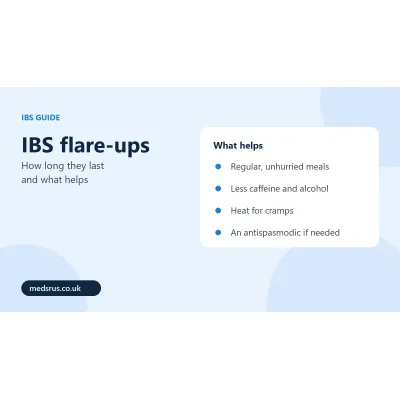
- Eat smaller meals at regular times, and take your time.
- Drink plenty of water. Cut down on tea, coffee, alcohol and fizzy drinks.
- If you have diarrhoea, avoid sugar-free sweets and gum containing sorbitol.
- If you have wind and bloating, oats and a spoonful of linseeds a day may help.
- If certain foods keep causing problems, a low FODMAP diet may help, ideally with support from a dietitian. See our beginner's guide to the low FODMAP diet.
Easing pain and cramps
- A hot water bottle or heat pad on your tummy can ease cramps.
- Gentle activity, such as walking or yoga, can help with bloating and stress.
- Relaxation techniques, such as slow breathing, can reduce the gut's sensitivity to stress.
Medicines from a pharmacy
If you've been diagnosed with IBS, a pharmacist can recommend medicines to ease symptoms during a flare-up:
- Antispasmodics such as mebeverine, peppermint oil capsules or hyoscine butylbromide, to relax the gut and ease cramps. See which IBS remedy to choose.
- Loperamide for diarrhoea.
- Bulk-forming laxatives such as ispaghula husk for constipation, taken with plenty of water.
- Probiotics: some people find these help. If you try one, take it for at least four weeks to see if it makes a difference.
Our IBS treatment page covers the medicines we offer and how a prescriber reviews your consultation.
When to see a GP
See a GP if you haven't been diagnosed with IBS, if your symptoms have changed, or if over-the-counter treatments don't help. Ask for an urgent appointment, or call NHS 111, if you have:
- blood in your poo or bleeding from your bottom
- unexplained weight loss
- a lump in your tummy
- a change in bowel habit lasting more than a few weeks, especially if you're over 50
- symptoms that wake you at night, or a high temperature
Our guide to symptoms you shouldn't ignore explains these in more detail.
Frequently asked questions
How long does an IBS flare-up last?
It varies. A flare-up can last a few hours, a few days or sometimes a few weeks. Symptoms often settle once a trigger such as stress or a particular food has passed.
What can I take for an IBS flare-up?
If you've been diagnosed with IBS, a pharmacist can recommend antispasmodics such as mebeverine, peppermint oil or hyoscine butylbromide for cramps, loperamide for diarrhoea, or a bulk-forming laxative for constipation.
Can stress cause an IBS flare-up?
Yes. Stress and anxiety are among the most common triggers, because the gut and brain are closely linked. Relaxation techniques, regular exercise and talking therapies can help.
Should I see a GP during an IBS flare-up?
See a GP if your symptoms are different from usual or don't improve with treatment. Get urgent advice if you have blood in your poo, unexplained weight loss, a lump in your tummy, or symptoms that wake you at night.
Sources: