


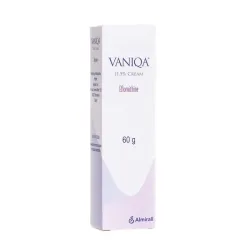



Unwanted facial hair is common in women, and far more common than most people realise. Dark or coarse hair on the chin, upper lip or jawline can affect your confidence, especially when it grows back quickly after removal. A prescription cream can slow regrowth, and works well alongside the hair removal methods you already use. MedsRus offers a prescription eflornithine cream for unwanted facial hair after a confidential online consultation with a UK prescriber.
Why do women get facial hair?
Everyone has fine hair on their face. In some women, hair grows thicker, darker and in a more "male" pattern, on the upper lip, chin, jawline or neck. When this is excessive, it's called hirsutism.
Common causes include:
- genes and ethnicity: some families and ethnic backgrounds naturally have more facial and body hair;
- hormones: higher levels of androgens (hormones such as testosterone), or more sensitivity to them;
- polycystic ovary syndrome (PCOS), which the NHS now calls polyendocrine metabolic ovarian syndrome (PMOS). It often comes with irregular periods, acne and weight gain;
- the menopause, when falling oestrogen levels shift the balance of hormones;
- some medicines, including certain steroids.
Often there's no medical cause at all, and it's simply how your hair grows.
When to see a GP first
Most unwanted facial hair isn't a sign of anything serious. But see a GP before starting treatment if:
- hair growth started suddenly or is getting worse quickly;
- you also have a deeper voice, thinning hair on your head, or a change in body shape;
- you have irregular or no periods;
- you have bad acne;
- you're under 25 and hair growth is heavy.
A GP can check your hormone levels and look for causes such as PCOS/PMOS. You can read more in our guide to contraceptive pills, as some combined pills help reduce hair growth in women with hormonal causes.
Unwanted facial hair treatment options
| Option | How it works | How long it lasts |
|---|---|---|
| Shaving, waxing, threading, plucking | Removes hair at or below the surface | Days to weeks |
| Hair removal creams | Dissolve hair at the surface | Days |
| Eflornithine cream (Vaniqa) | Slows down hair growth | Ongoing, while you use it |
| Laser or electrolysis | Damages or destroys the hair follicle | Long-term, after several sessions |
| Hormonal treatments from a GP | Reduce the effect of androgens | Ongoing, while you take them |
Many women combine methods, for example using Vaniqa to slow regrowth so they need to shave, wax or thread less often.
Eflornithine cream (Vaniqa)
Vaniqa contains eflornithine. It blocks an enzyme in the hair follicle that hair needs to grow, so hair grows more slowly and becomes finer and less noticeable. It doesn't remove hair, so you carry on with your usual hair removal.
How to use Vaniqa
- Apply a thin layer to clean, dry skin on the affected areas of your face and under your chin, twice a day, at least 8 hours apart.
- Rub it in until it disappears.
- Don't wash the area for at least 4 hours afterwards.
- Wait at least 5 minutes after shaving or other hair removal before applying it, as it may sting.
- You can apply make-up or sunscreen over it once it's dry.
How long does it take to work?
You may notice a difference within about 8 weeks. If there's no improvement after 4 months, stop using it and speak to us or your GP. Vaniqa only works while you use it: hair usually returns to how it was about 8 weeks after you stop.
Side effects
The most common side effects are mild and affect the skin where you apply it:
- acne or spots;
- redness, dryness, stinging or burning;
- an itchy rash.
These often settle. Stop and get advice if your skin becomes very irritated.
Who shouldn't use Vaniqa
It isn't suitable if you're pregnant, trying to get pregnant or breastfeeding, or for anyone under 12. Tell the prescriber about any skin conditions or other medicines.
Tips for managing facial hair
- Threading and waxing remove hair from the root, so it grows back more slowly than shaving.
- Shaving doesn't make hair thicker, despite the myth. It just cuts it at a blunt angle.
- Avoid plucking stray hairs repeatedly in the same spot, as it can cause ingrown hairs and irritation.
- Laser hair removal works best on dark hair and lighter skin, and needs several sessions. It's rarely available on the NHS.
- Be gentle with your skin after removal: use a fragrance-free moisturiser and avoid perfumed products.
The emotional side
Unwanted facial hair can affect how you feel about yourself, and many women find it hard to talk about. You're not alone, and it's a completely reasonable thing to seek treatment for. If it's affecting your mood or relationships, talk to your GP.
How to order facial hair treatment from MedsRus
- Complete a confidential consultation about your hair growth, your health and any medicines you take.
- A UK prescriber reviews it and, if Vaniqa is suitable, approves it.
- We send it in plain, discreet packaging.
Unwanted facial hair FAQs
What is the best treatment for unwanted facial hair?
It depends on the cause and what suits you. Many women combine a cream that slows growth, such as Vaniqa, with threading, waxing or laser.
Does eflornithine cream remove hair permanently?
No. It slows hair growth while you use it. Hair returns about 8 weeks after you stop.
How long does Vaniqa take to work?
Usually about 8 weeks. Stop if there's no improvement after 4 months.
Can I use Vaniqa with laser hair removal?
Many women do, but ask your laser clinic first.
Is facial hair a sign of PCOS (PMOS)?
It can be, especially with irregular periods and acne. PCOS is now also called polyendocrine metabolic ovarian syndrome (PMOS). See a GP to check.
Why am I getting chin hair after the menopause?
Falling oestrogen levels change your hormone balance, which commonly causes more chin and upper-lip hair.
Further reading
Sources: