


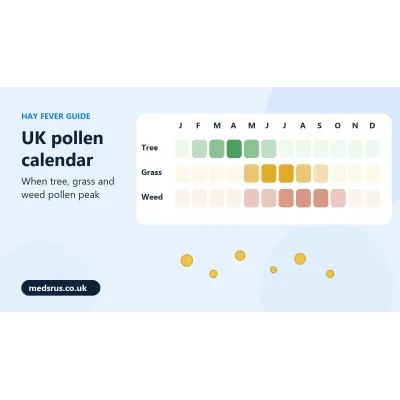
If your eyes start streaming in April but your friend doesn't suffer until June, you're probably reacting to different pollen. Each type is released at a different time of year, so knowing which one affects you lets you start treatment before symptoms take hold.
This guide sets out the UK pollen calendar month by month, explains how where you live changes the timing, and covers what helps when the count is high.
The three pollen seasons at a glance
The Met Office splits the UK hay fever year into three overlapping seasons:
- Tree pollen: typically late March to mid-May. Around 1 in 4 people with hay fever react to it, with birch one of the most common culprits.
- Grass pollen: mid-May to July. This is the one most people are allergic to, and it has two peaks.
- Weed pollen: usually the end of June to September, though weeds such as nettle and dock can release pollen at other times too.
Source: Met Office, When is hay fever season in the UK?
UK pollen calendar, month by month
| Month | Tree pollen | Grass pollen | Weed pollen | What to expect |
|---|---|---|---|---|
| January | Very low | None | None | Quiet. In a mild winter, hazel can start releasing a little pollen. |
| February | Low | None | None | Hazel and alder may appear in mild spells. Most people have no symptoms yet. |
| March | Rising | None | None | Tree pollen season usually begins in the second half of the month. If you react to tree pollen, start treatment now. |
| April | High | None | Low | Peak month for tree pollen, including birch, across much of the UK. |
| May | Falling | Rising | Low | Tree pollen fades by mid-May as grass pollen begins. A changeover month, so some people feel both. |
| June | Low | Very high | Rising | The main grass peak, usually in the first two weeks of June in England and Wales. The worst month for most people. |
| July | None | High | Moderate | A second, lower grass peak in the first two weeks of July, then a slow decline. Weed season under way. |
| August | None | Falling | Moderate | Grass tails off. Weeds such as nettle and mugwort keep some people sneezing. |
| September | None | Low | Falling | Weed season ends. Most hay fever settles. |
| October to December | None | None | Very low | Pollen is rarely the cause of symptoms now. If you're still sneezing, a cold or another allergy is more likely. |
These are typical patterns. A cold winter keeps trees dormant for longer and delays the start, and a dry spring can mean less pollen overall.
How your region changes the timing
The pollen season doesn't start on the same day across the country. The Met Office notes that the north of the UK generally has a later start and a shorter season, with less pollen overall.
- South and East of England, including London: usually the earliest start and some of the highest grass counts. Many people here notice symptoms first.
- Midlands and Wales: similar timing to the south, sometimes slightly later.
- North of England: a slightly later and shorter season.
- Scotland: typically the latest start and the shortest season, though grass pollen can still be high on warm days in June and July.
- Coasts: sea breezes often carry pollen away from the shore, so coastal areas can feel easier on a high-pollen day.
If you move around the country for work or holidays in late spring and summer, check the forecast for where you'll be, not just where you live.
What makes the pollen count high on a given day
Weather has a big effect on how much pollen is in the air:
- Warm, dry days: for grass, a top temperature of around 18 to 28°C, low humidity and a gentle breeze can give a high count.
- Sunshine: plants make less pollen during long cloudy spells.
- Rain: a shower washes pollen out of the air, so counts often drop afterwards. Thunderstorms can briefly make symptoms worse for some people.
- Wind: breezy, dry weather spreads pollen further, including into towns and cities.
The Met Office treats a grass pollen reading of 50 to 150 grains per cubic metre of air as high. Checking the daily forecast helps you plan outdoor activities and decide when to take your treatment.
Is it hay fever or a cold?
Hay fever usually brings sneezing, a runny or blocked nose, and itchy, watery eyes, along with an itchy throat, mouth or ears. It tends to come back at the same time each year and lasts for weeks rather than days. A cold is more likely to bring a sore throat, aches or a raised temperature, and clears within a week or two. Our guide to telling hay fever apart from a cold goes into more detail.
Practical ways to cut your exposure
These steps, recommended by the NHS, make a noticeable difference on high-pollen days:
- Put a thin layer of petroleum jelly around your nostrils to trap pollen.
- Wear wraparound sunglasses and a wide-brimmed hat when you go out.
- Shower and change your clothes after being outside.
- Keep windows and doors shut as much as you can, especially in the early evening.
- Vacuum regularly, dust with a damp cloth, and use a pollen filter in your car if it has one.
- Avoid cutting or walking on grass, drying washing outside, and smoke of any kind.
- Keep fresh flowers out of the house, and wipe pets down if they've been outside.
Treatments a pharmacist can help with
Many people manage hay fever well with treatments from a pharmacy. A pharmacist can help you choose between:
- Antihistamine tablets: one-a-day, non-drowsy options such as cetirizine or loratadine help with sneezing, itching and a runny nose.
- Steroid nasal sprays: work best for a blocked nose. They take a few days to build up, so start them a week or two before your pollen season.
- Antihistamine or sodium cromoglicate eye drops: for itchy, red or watery eyes.
Timing matters. If you know your symptoms start in April, beginning a nasal spray in late March usually works better than waiting until you're already struggling. You can compare options in our hay fever and allergy treatments, or read more about choosing hay fever tablets.
When to see a GP
Speak to a GP if your symptoms are getting worse, or if they don't improve after trying pharmacy treatments. Get help quickly if hay fever is setting off wheezing, tightness in the chest or breathlessness, particularly if you have asthma.
Frequently asked questions
What month is hay fever worst in the UK?
For most people it's June, when grass pollen peaks. If you react to tree pollen, April is usually your worst month.
When does hay fever season end?
Weed pollen usually finishes by the end of September, so most people are symptom-free by October.
Can hay fever start in February?
Yes, for some people. In a mild winter, hazel and alder trees can release pollen early, so people allergic to them may notice symptoms in February.
Why is my hay fever worse in the evening?
Pollen released during the day can settle back down as the air cools in the evening, so counts at ground level can rise again. Keeping windows closed in the early evening helps.
Should I start hay fever treatment before symptoms begin?
Yes, especially with steroid nasal sprays. Starting one to two weeks before your usual season gives the best protection.