


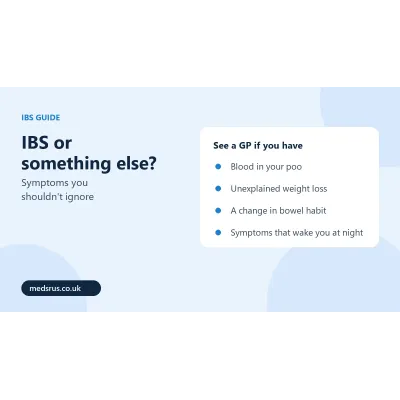
IBS is common, affecting up to one in five people at some point. Its symptoms, such as tummy pain, bloating, diarrhoea and constipation, overlap with several other conditions, so it's important that IBS is diagnosed by a doctor rather than assumed. Most people with these symptoms do have IBS, but some symptoms should always be checked.
Warning signs that need a GP appointment
See a GP promptly, or call NHS 111, if you have any of the following. They're not typical of IBS and need investigating:
- blood in your poo, black or tarry poo, or bleeding from your bottom
- unexplained weight loss
- a lasting change in your bowel habit, such as looser or more frequent poo, especially if you're over 50
- a lump in your tummy or bottom
- symptoms that wake you up at night
- a high temperature, or feeling generally very unwell
- tiredness or breathlessness that could be caused by anaemia
- a family history of bowel cancer, ovarian cancer, coeliac disease or inflammatory bowel disease
For women, persistent bloating (most days for three weeks or more), feeling full quickly, or pelvic pain should be checked by a GP, especially over the age of 50. These can occasionally be signs of ovarian cancer, which is often mistaken for IBS.
Go to A&E or call 999 if you have severe tummy pain that comes on suddenly, are vomiting blood, or are passing a lot of blood from your bottom.
Conditions that can be mistaken for IBS
Coeliac disease
An autoimmune reaction to gluten that causes diarrhoea, bloating, tiredness and weight loss. It's diagnosed with a blood test, and you need to keep eating gluten until you're tested. NICE recommends that everyone with suspected IBS is tested for coeliac disease.
Inflammatory bowel disease (Crohn's disease and ulcerative colitis)
These cause inflammation of the gut. Symptoms include diarrhoea that may contain blood or mucus, tummy pain, weight loss and tiredness. A stool test called faecal calprotectin can help tell IBS from inflammatory bowel disease.
Bowel cancer
Less common, particularly in younger people, but symptoms such as bleeding, a change in bowel habit and weight loss should always be checked. The NHS offers bowel cancer screening to people aged 50 to 74 in England. Take part when you're invited.
Ovarian cancer
Can cause persistent bloating, pelvic or tummy pain and feeling full quickly. A GP may arrange a blood test (CA125) and a scan.
Other causes
Food intolerances such as lactose intolerance, gut infections, bile acid problems, thyroid problems, endometriosis and side effects of medicines can all cause similar symptoms. Diverticular disease is more common with age and can cause pain and changes in bowel habit.
How IBS is diagnosed
There's no single test for IBS. A GP will usually diagnose it based on your symptoms, such as tummy pain or discomfort that eases after a poo, or is linked to changes in how often you go or what your poo looks like, together with bloating or other typical symptoms for at least six months. They'll also arrange tests to rule out other causes. These usually include:
- a blood count to check for anaemia
- tests for inflammation
- a coeliac disease blood test
- a faecal calprotectin stool test, if you have diarrhoea
If anything unusual is found, or you have warning signs, you may be referred for further tests such as a colonoscopy.
After an IBS diagnosis
Once IBS is confirmed, diet changes, stress management and medicines can all help. Our guides to the low FODMAP diet and IBS antispasmodics explain the options, and our IBS treatment page covers the treatments we offer. If your symptoms change in future, see a GP again rather than assuming it's your IBS.
Frequently asked questions
Can IBS cause blood in poo?
No. Blood in your poo isn't a symptom of IBS. It can have harmless causes such as piles, but it should always be checked by a GP.
What tests are done to diagnose IBS?
A GP usually arranges blood tests to check for anaemia, inflammation and coeliac disease, and sometimes a stool test called faecal calprotectin. IBS is diagnosed when your symptoms fit and other causes have been ruled out.
Can IBS start later in life?
It can, but new bowel symptoms in older adults are more likely to need investigating. If you're over 50 and notice a change in your bowel habit, see a GP.
Is bloating a sign of ovarian cancer?
Most bloating isn't serious, but bloating that's persistent, happens most days for three weeks or more, or comes with feeling full quickly or pelvic pain should be checked by a GP, especially if you're over 50.
Sources: