


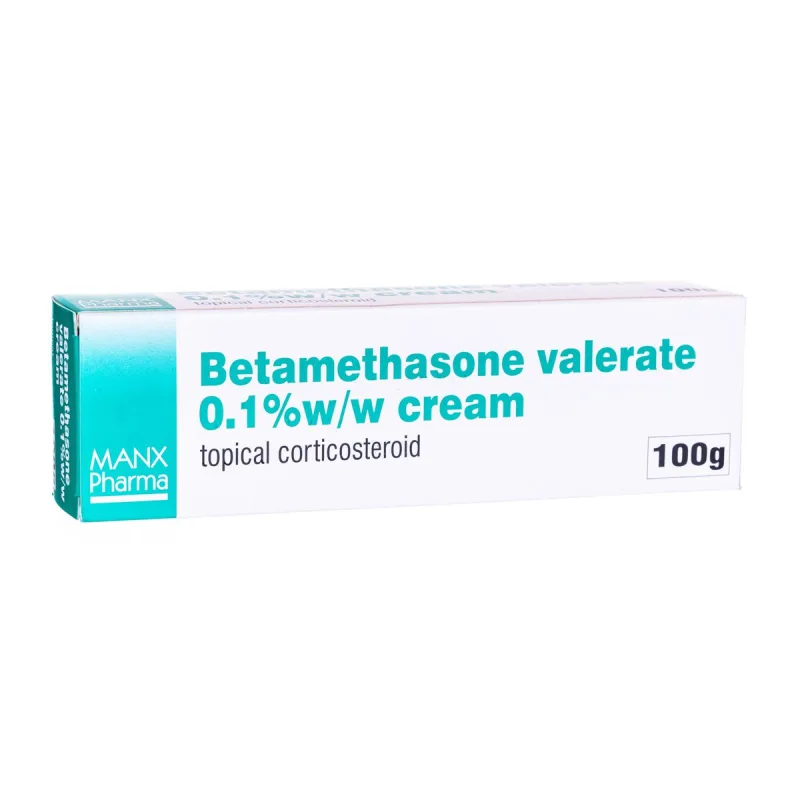
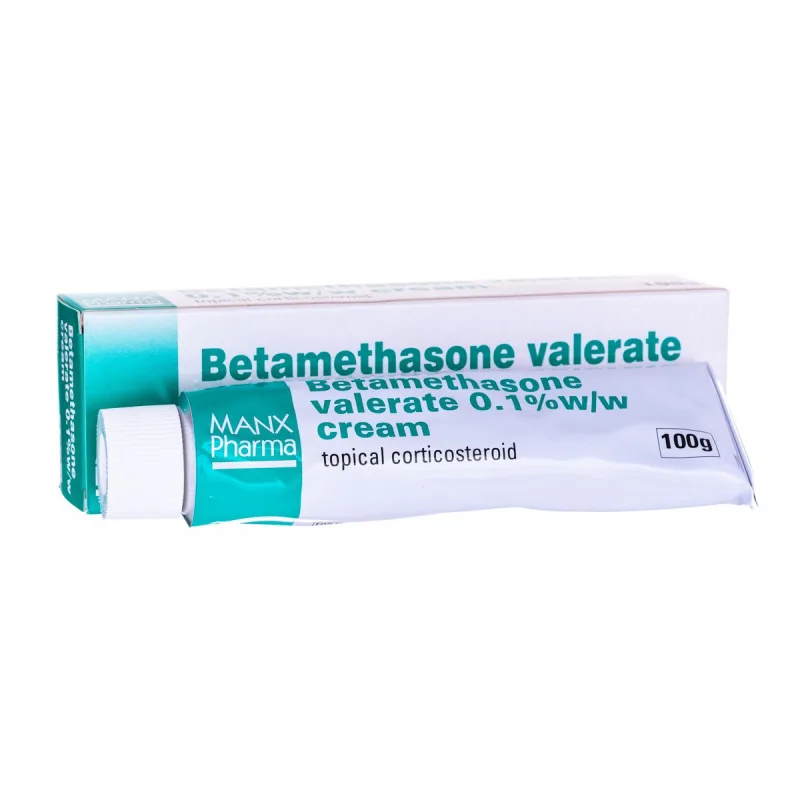
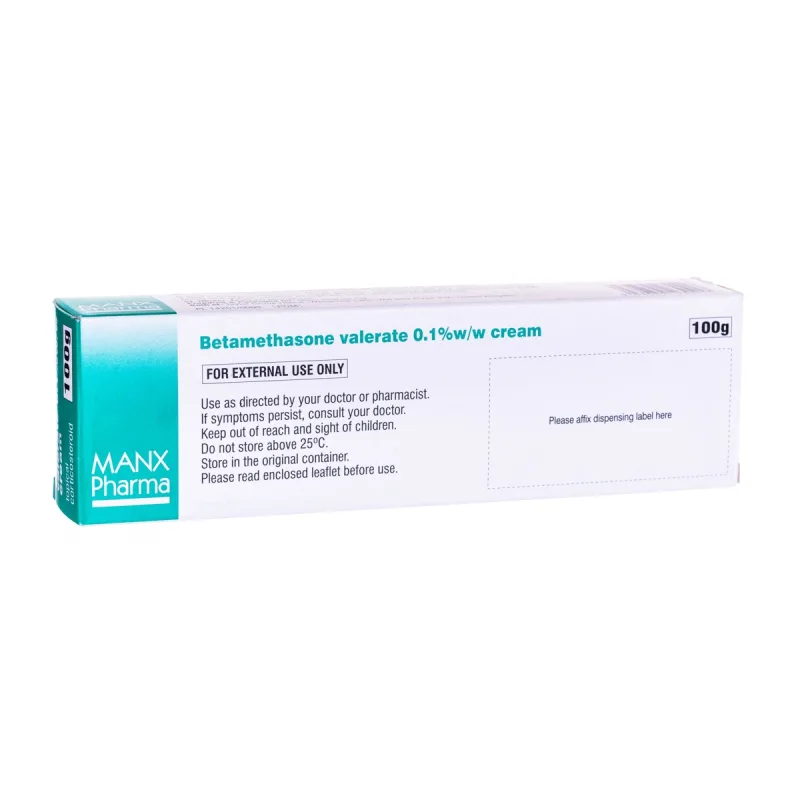
Images are for illustration only.
Betamethasone Valerate 0.1% Cream
Betamethasone valerate 0.1% cream is a potent steroid cream for short courses on flare-ups of eczema, psoriasis and dermatitis on the body. It's the generic version of Betnovate, with the same medicine at the same strength. A UK prescriber reviews your online consultation before it's supplied.
Free online assessment with a UK prescriber



Betamethasone valerate 0.1% cream is a potent steroid cream used in short courses to calm flare-ups of eczema, psoriasis and dermatitis. It's the generic version of Betnovate, with the same medicine at the same strength. A UK prescriber reviews a short online consultation before we supply it.
Our page on eczema and psoriasis treatment explains how much cream to use, the role of emollients and when to see a GP.
Betamethasone cream at a glance
| Details | |
|---|---|
| Active ingredient | Betamethasone valerate 0.1% |
| Strength | Potent topical steroid |
| Used for | Flare-ups of eczema, psoriasis and dermatitis on the body |
| How often | A thin layer once or twice a day |
| How long | Usually no more than 4 weeks, then stop or step down |
| Prescription needed | Yes |
Where can you use betamethasone cream?
Use it on patches of eczema, psoriasis or dermatitis on the body, arms, legs, hands and feet.
Don't use it on your face, groin or armpits unless a doctor has told you to, because the skin there is thinner and absorbs more steroid. For the scalp, a liquid such as Betacap scalp application is easier to use. Never use it inside the mouth, nose or eyes.
How to use betamethasone cream
- Wash and dry your hands, then apply a thin layer to the affected skin only, once or twice a day, and rub it in gently.
- Use the fingertip unit to measure: a line of cream from the tip of an adult finger to the first crease covers an area about the size of two adult palms.
- Keep using your emollient. Apply it first, then wait about 30 minutes before applying the steroid cream.
- Use it until the flare has settled, usually for no more than 4 weeks, then stop or step down to a milder steroid as your prescriber advises.
- Don't cover it with a dressing or bandage unless a doctor has told you to, as this increases how much is absorbed.
- Wash your hands afterwards, unless you're treating your hands.
How long does it take to work?
Most people see an improvement within a few days, and the flare usually settles within 1 to 2 weeks. If your skin hasn't improved after 2 weeks, speak to a prescriber or your GP.
Side effects
Used as directed for short courses, betamethasone rarely causes problems.
- Common: mild burning, stinging or itching where you apply it, usually in the first few days.
- With long-term or heavy use: thinning skin, stretch marks, visible small blood vessels and lighter patches of skin.
- Rarely: using large amounts for a long time, especially under dressings or on large areas, can affect the rest of the body by suppressing the body's own steroid hormones.
Stop using it and speak to a pharmacist or GP if your skin gets worse, looks infected (weeping, crusting or yellow scabs), or you develop a rash or swelling that suggests an allergy to the cream.
Topical steroid withdrawal
The MHRA has warned that, rarely, people who have used a steroid on their skin for a long time get burning, redness and peeling when they stop. Use it for the shortest time needed, and talk to a prescriber if you've been using it continuously for months.
Who shouldn't use betamethasone cream?
Don't use it on, or if you have:
- rosacea, acne or perioral dermatitis (a red, bumpy rash around the mouth);
- skin infections that haven't been treated, such as cold sores, chickenpox, fungal infections or impetigo;
- broken skin or leg ulcers;
- itching without inflammation, including itching around the anus or genitals on its own;
- an allergy to betamethasone or any of the other ingredients.
If you're pregnant or breastfeeding, only use it if a doctor or prescriber has agreed. Our online service is for adults.
Betamethasone cream, Betnovate and Betacap
- Betamethasone cream (this page) is the generic version, usually the lower-cost option.
- Betnovate is the original brand of the same medicine, also available as an ointment.
- Betacap is the same steroid as a liquid for the scalp.
How to get betamethasone cream from MedsRus
- Complete a short consultation about your skin, where it's affected, what you've tried and any other medicines. You may be asked for a photo.
- A UK prescriber reviews it and, if betamethasone is suitable, approves it and explains how long to use it.
- We send it in discreet packaging.
Betamethasone cream FAQs
Is betamethasone the same as Betnovate?
Yes. Betnovate is the original brand of betamethasone valerate 0.1% cream. Generic betamethasone cream contains the same medicine at the same strength and works in the same way, usually for less.
Can I use betamethasone cream on my face?
Not unless a doctor has told you to. Betamethasone is a potent steroid, and the skin on the face is thin, so it can thin the skin or cause spots and redness.
How long can I use betamethasone cream for?
Usually for no more than 4 weeks at a time. Once the flare has settled, stop or step down to a milder steroid. Speak to a prescriber if you need it for longer.
Can I use betamethasone cream with moisturiser?
Yes, and you should keep using your moisturiser (emollient). Apply the emollient first, then wait about 30 minutes before applying the steroid cream.
Is betamethasone cream safe in pregnancy?
It can sometimes be used in pregnancy or while breastfeeding, but only if a doctor or prescriber agrees. Speak to your GP or midwife first, and use the smallest amount for the shortest time.
Sources: