



Short answer: ice pick headaches are sudden, stabbing pains in the head that last a few seconds. Doctors call them primary stabbing headaches. The exact cause isn't known, but they're more common in people who get migraines, and on their own they're usually harmless.
The pain can be startling. It often feels like a sharp jab in one small spot, then it's gone before you've had time to react. This guide explains what's thought to be behind it, how it differs from other headaches, and the signs that mean you should get checked.
Get help straight away
- Call 999 or go to A&E for a headache that starts suddenly and is extremely painful, or a headache with a fit, weakness or numbness in the face or body, confusion or drowsiness, difficulty speaking, loss of vision, a very high temperature with a stiff neck, or a rash that does not fade when a glass is rolled over it. The same applies to a headache after a head injury in the last 3 months.
- Ask for an urgent GP appointment or call NHS 111 for a headache with jaw pain when eating or a sore, tender scalp, a headache with eye or vision problems or being sick, or one that's set off or made worse by coughing, sneezing or bending down.
- See a GP if you're over 50 and these headaches are new, or if they're getting more frequent.
What an ice pick headache feels like
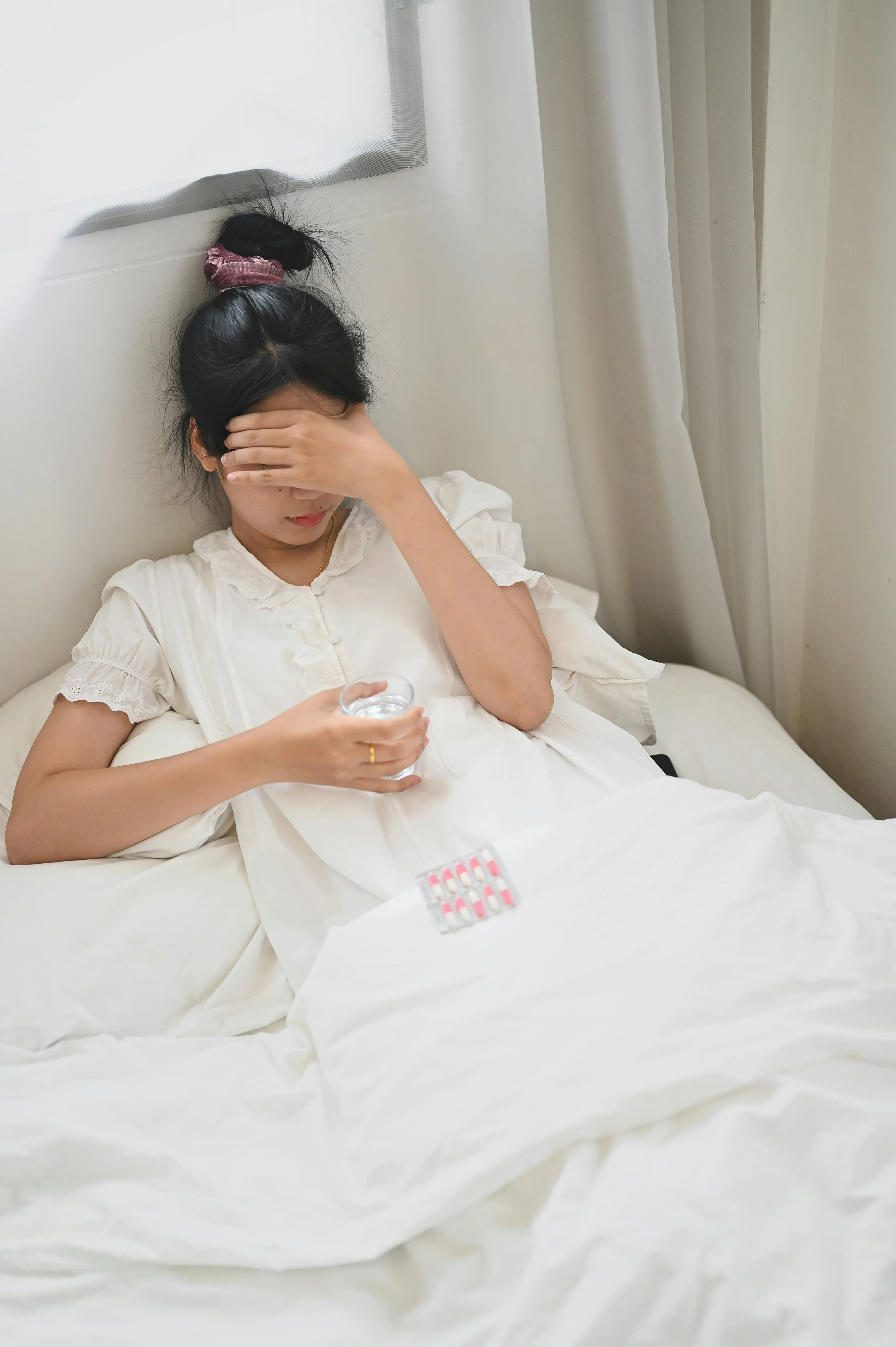
Most people describe a single sharp stab, or a short run of stabs, in one spot. Common places are the temple, around or behind one eye, or the top or side of the head. The spot can move from one attack to the next.
Each stab usually lasts one to three seconds, occasionally up to about 10 seconds. Some people get a cluster of them over a few minutes; others get one every few weeks or months. There's no build-up beforehand and nothing lingers afterwards, which is one of the things that sets it apart from other headaches.
How it differs from other headaches
| Type | How long it lasts | What it's like |
|---|---|---|
| Ice pick (primary stabbing) headache | A few seconds | Sudden sharp stab in one small spot, then gone; no other symptoms |
| Migraine | Hours, up to about 3 days | Throbbing, often one side, with feeling sick or sensitivity to light and noise |
| Cluster headache | 15 minutes to 3 hours | Severe pain around one eye, with a watery eye or blocked nostril on the same side, often at the same time each day |
| Trigeminal neuralgia | A split second to about 2 minutes | Electric-shock pain in the cheek, jaw, teeth or gums, often set off by touch, eating or brushing teeth |
| Occipital neuralgia | Seconds to minutes | Shooting pain from the back of the head or upper neck, often with a tender scalp |
Tension headaches are different again: a steady, pressing ache on both sides of the head that builds up gradually.
What causes ice pick headaches?
Nobody knows for certain. The leading idea is that they come from brief misfiring in the nerves that carry pain signals from the head, particularly the trigeminal nerve, which supplies the forehead, eyes and face. That would explain why the pain is so short and so precisely located.
What is known is who tends to get them. They're more common in people who have migraines or cluster headaches, and the stabs often turn up on the same side of the head as the person's usual migraine pain. They can happen at any age.
Possible triggers
There's little research on triggers for stabbing headaches specifically. The things below are general headache triggers that some people notice make their attacks more likely. They aren't proven causes, but they're worth looking at if you get frequent attacks:
- stress and poor or irregular sleep
- not drinking enough fluid
- changes in caffeine intake, including missing your usual coffee
- long periods hunched over a screen, with tension in the neck and shoulders
- migraine triggers, if you also get migraines
Occasionally, stabbing pains are a sign of another problem, such as shingles affecting a nerve on the head or, rarely, a condition inside the skull. That's why new or changing headaches with other symptoms should always be checked.
When to worry about stabbing head pain
A brief stab that's gone in seconds, with nothing else wrong, is very unlikely to be serious. It's more of a concern when the pain comes with other symptoms or changes pattern. Use the list at the top of this page. In particular, see a GP if:
- the stabs always happen in exactly the same spot
- you're getting them much more often, or they're lasting longer
- you have a constant headache in between attacks
- you're over 50 and they're new; if they come with jaw pain when eating or a tender scalp, ask for an urgent appointment the same day, as these can be signs of giant cell (temporal) arteritis
Treatment and prevention

Most people don't need treatment. Each stab is over before a painkiller could start to work, so taking tablets after an attack won't help.
If attacks are frequent or are affecting your day, it helps to keep a headache diary for a few weeks: when the stabs happen, where, and what you'd been doing, eating and drinking, and how you slept. Take it to your GP. If they confirm primary stabbing headache, they may suggest a preventive medicine. Indometacin, an anti-inflammatory, is the one most often used, but it isn't suitable for everyone, so it's a decision for the doctor.
If you also get migraines, getting those under better control can reduce stabbing headaches too. Our page on migraine treatment options explains what can help, including triptans such as sumatriptan for migraine attacks. Triptans are for migraine, not for ice pick headaches themselves.
Ice pick headache FAQs
Are ice pick headaches serious?
Usually not. On their own, brief stabbing pains that come and go are almost always harmless. Get checked if they come with other symptoms, change pattern, always hit the same spot, or start for the first time after the age of 50.
Can stress cause ice pick headaches?
Stress and poor sleep don't directly cause them, but many people notice attacks are more frequent when they're stressed or tired. Regular sleep, meals and fluids can help if your attacks seem linked to these.
Are ice pick headaches a sign of a brain tumour?
Very rarely. Headaches caused by a brain tumour are usually persistent and get worse over time, and they tend to come with other symptoms such as fits, being sick, weakness, changes in vision or personality. A short stab with no other symptoms is very unlikely to mean a tumour, but see a GP if you're worried.
Why do I get stabbing pains in my head when I stand up?
Ice pick headaches can happen at any time, including when you move or stand. Feeling light-headed or dizzy on standing is a different problem, often caused by a brief drop in blood pressure. A headache that comes on whenever you're upright and eases when you lie down needs checking by a GP.
Can ice pick headaches be a sign of a stroke?
A brief stab on its own is not a typical sign of a stroke. Call 999 if a headache comes with a drooping face, weakness in an arm or leg, slurred speech, confusion or loss of vision, or if it's sudden and the worst headache you've had.
How do you stop ice pick headaches?
Individual stabs are too short to treat. If they're frequent, keep a headache diary and see a GP, who may suggest a preventive medicine such as indometacin. Looking after any migraines you have can also reduce attacks.
Sources: