


The low FODMAP diet is one of the best-studied ways to ease IBS symptoms such as bloating, wind, tummy pain and diarrhoea. It isn't a diet for life. It's a short-term way to find out which foods trigger your symptoms, so you can eat as widely as possible without them.
UK guidance from NICE recommends trying simple diet and lifestyle changes first, and only starting a low FODMAP diet with support from a healthcare professional with expertise in diet, usually a dietitian. This guide explains how it works so you know what to expect.
What are FODMAPs?
FODMAPs are types of carbohydrate that some people don't absorb well in the small intestine. The name stands for Fermentable Oligosaccharides, Disaccharides, Monosaccharides And Polyols. When they reach the large intestine, gut bacteria ferment them and they draw in water. In people with IBS, whose gut tends to be more sensitive, this can cause bloating, pain, wind and changes in bowel habit.
| Group | Found in (examples) |
|---|---|
| Fructans and GOS (oligosaccharides) | Wheat, rye, onions, garlic, beans, lentils |
| Lactose (a disaccharide) | Milk, soft cheese, yoghurt |
| Excess fructose (a monosaccharide) | Apples, pears, mango, honey |
| Polyols | Stone fruits, mushrooms, cauliflower, sugar-free sweets and gum (sorbitol, mannitol, xylitol) |
Before you start
- Make sure it's IBS. Symptoms such as bleeding, weight loss or a change in bowel habit need checking by a GP first. Coeliac disease should be ruled out with a blood test before you cut down on wheat, because the test is only reliable while you're still eating gluten.
- Try first-line changes. Regular meals, less caffeine, alcohol and fizzy drinks, and adjusting fibre help many people without a restrictive diet.
- Ask for a dietitian referral. Your GP can refer you. A dietitian makes sure you still get enough fibre, calcium and other nutrients.
- It isn't suitable for everyone. People with a history of eating disorders, who are underweight, or who are pregnant should get specialist advice before restricting their diet.
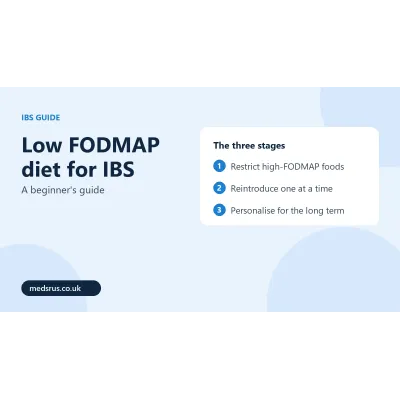
The three stages
1. Restriction (usually 2 to 6 weeks)
You swap high FODMAP foods for low FODMAP alternatives. Most people who respond notice an improvement within a few weeks. If there's no improvement after this stage, the diet probably isn't the answer for you, and it's better to stop than carry on restricting.
2. Reintroduction
Foods from each FODMAP group are added back one at a time, in increasing amounts over a few days, to see which ones cause symptoms and how much you can tolerate. This is the most important stage, and the one most people skip.
3. Personalisation
You go back to eating as varied a diet as possible, avoiding or limiting only the foods you've found trigger symptoms. Many people find they can tolerate small amounts of their trigger foods.
Simple swaps during the restriction stage
- Onion and garlic: use garlic-infused oil, chives or the green part of spring onions.
- Wheat bread and pasta: use oats, rice, potatoes, quinoa, or gluten-free bread and pasta.
- Cow's milk: use lactose-free milk or a calcium-fortified plant milk such as almond or oat (in moderate amounts).
- Apples and pears: try oranges, kiwi, strawberries, grapes or a firm banana.
- Sugar-free sweets: avoid those containing sorbitol, mannitol or xylitol.
Common mistakes
- Staying on the restriction stage for months. Long-term restriction can affect gut bacteria and nutrition.
- Cutting out foods without reintroducing them.
- Relying on unreliable food lists online. A dietitian or a well-validated app is more accurate.
- Expecting the diet to fix everything. Stress, sleep and activity also matter in IBS.
Diet works best alongside other treatments where needed. Our IBS treatment page explains the medicines that can help with cramps and bloating, and our guide to managing an IBS flare-up has practical tips.
Frequently asked questions
How long should I follow a low FODMAP diet?
The restriction stage usually lasts 2 to 6 weeks. After that, foods are reintroduced one group at a time to find your triggers. It isn't meant to be followed strictly long term.
Do I need a dietitian for the low FODMAP diet?
UK guidance recommends doing it with a healthcare professional with expertise in diet, usually a dietitian. They help make sure your diet stays balanced and that you reintroduce foods properly. Ask your GP for a referral.
Is the low FODMAP diet the same as gluten-free?
No. It reduces wheat because of the fructans it contains, not because of gluten. Get tested for coeliac disease before cutting down on wheat, as the test needs you to be eating gluten.
What if the low FODMAP diet doesn't help?
If there's no improvement after the restriction stage, stop and go back to your usual diet. Speak to your GP or dietitian about other options, such as medicines or psychological therapies.
Sources: