


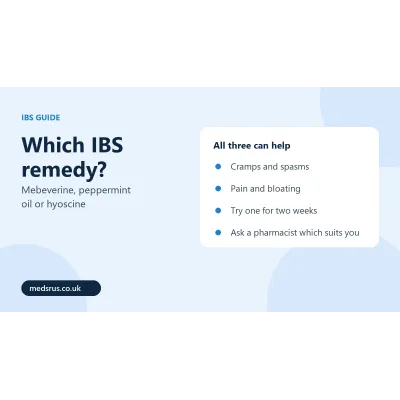
Antispasmodics are often the first medicines people try for IBS cramps and tummy pain. They work by relaxing the muscles in the wall of the gut. The three most widely used in the UK are mebeverine, peppermint oil and hyoscine butylbromide. They work in slightly different ways and suit different people.
Pharmacy versions of these medicines are for adults whose IBS has already been diagnosed by a doctor. If you haven't been diagnosed, or your symptoms have changed, see a GP first.
Mebeverine
How it works: mebeverine relaxes the muscle of the gut directly, easing spasms and pain without affecting normal gut movement.
How it's taken: usually one 135 mg tablet three times a day, about 20 minutes before meals. Some versions are slow-release capsules taken twice a day. Follow the leaflet for your product.
Side effects: uncommon. Some people get indigestion, heartburn, dizziness or a rash.
Points to know: it's generally well tolerated and has few interactions with other medicines. Not usually recommended in pregnancy or breastfeeding without advice.
Peppermint oil capsules
How it works: the menthol in peppermint oil relaxes the gut muscle. The capsules have a special coating so they release the oil in the intestine, not the stomach.
How it's taken: usually one or two capsules up to three times a day, before meals. Swallow them whole with water; don't chew them or take them at the same time as indigestion remedies, as this can release the oil too early.
Side effects: heartburn and a peppermint taste or smell are the most common. Rarely, a sore bottom.
Points to know: it may not suit people who get heartburn or acid reflux. It's a good choice if you'd prefer a plant-based option.
Hyoscine butylbromide
How it works: hyoscine butylbromide is an antimuscarinic. It blocks the nerve signals that make gut muscles contract, which eases cramps.
How it's taken: for IBS, usually 10 mg three times a day, which can be increased up to 20 mg four times a day if needed. Follow the leaflet for your product.
Side effects: dry mouth, constipation, a faster heartbeat and, less often, blurred vision.
Who should avoid it: people with closed-angle glaucoma, myasthenia gravis, a fast or irregular heartbeat, or problems passing urine (for example, an enlarged prostate), unless a doctor advises otherwise. Check with a pharmacist if you take other medicines that cause a dry mouth.
At a glance
| Medicine | Usual timing | Main side effects | May not suit |
|---|---|---|---|
| Mebeverine | 20 minutes before meals | Uncommon: indigestion, dizziness | Pregnancy and breastfeeding without advice |
| Peppermint oil | Before meals, swallowed whole | Heartburn | People with acid reflux |
| Hyoscine butylbromide | Up to four times a day | Dry mouth, constipation | Glaucoma, urinary retention, fast heart rate |
Which one should I try?
There's no single best antispasmodic. Evidence suggests all three can help some people with IBS pain, and response varies from person to person. Things to consider:
- If you get heartburn, mebeverine or hyoscine may suit you better than peppermint oil.
- If constipation is your main symptom, hyoscine may make it worse.
- If you take several other medicines, mebeverine has fewer interactions.
Give a medicine about two weeks before deciding whether it helps. If it doesn't, talk to a pharmacist about trying another, or see a GP. A GP can also suggest other treatments, such as a low-dose antidepressant used for gut pain, or psychological therapies.
Antispasmodics and other IBS symptoms
Antispasmodics ease cramps and pain but don't directly treat diarrhoea or constipation. For those, loperamide or a bulk-forming laxative may help. Our guide to IBS flare-ups covers this, and our IBS treatment page explains the options we offer, including mebeverine.
See a GP urgently if you notice blood in your poo, unexplained weight loss or a lump in your tummy, as these aren't caused by IBS.
Frequently asked questions
Which is better for IBS, mebeverine or peppermint oil?
Both can ease IBS cramps, and response varies between people. Peppermint oil can cause heartburn, so mebeverine may suit you better if you get acid reflux. A pharmacist can help you choose.
Can I take mebeverine and peppermint oil together?
They're not usually taken together. It's better to try one for about two weeks, then switch if it doesn't help. Ask a pharmacist before combining IBS medicines.
Can I buy IBS medicines without a prescription?
Pharmacies can sell some mebeverine, peppermint oil and hyoscine butylbromide products to adults whose IBS has already been diagnosed by a doctor. If you haven't been diagnosed, see a GP first.
How quickly do antispasmodics work?
Some people notice relief within a few days, but it's worth trying a medicine for about two weeks before deciding whether it helps.
Sources: