


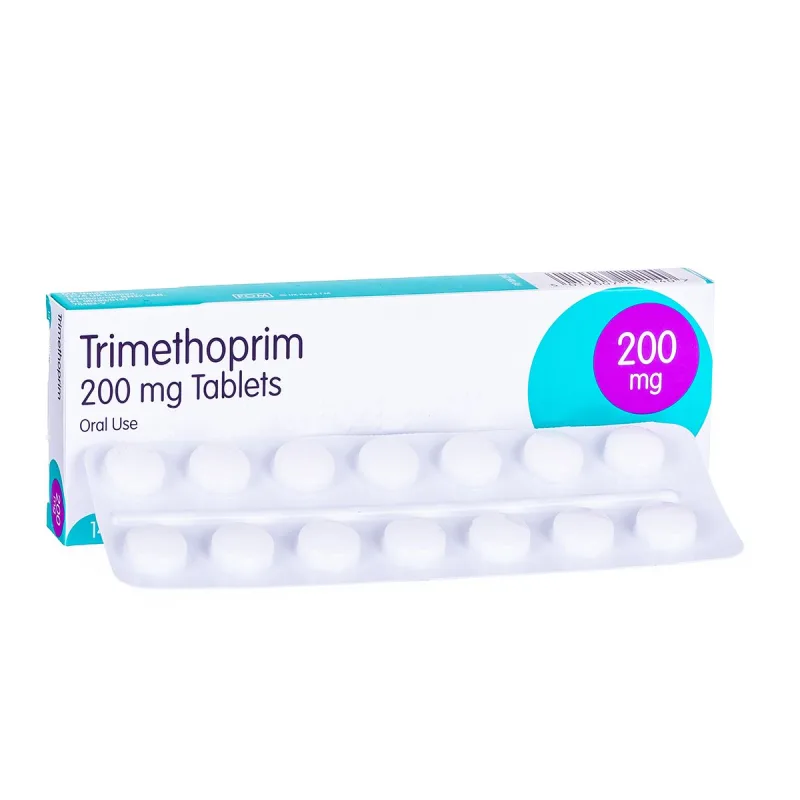
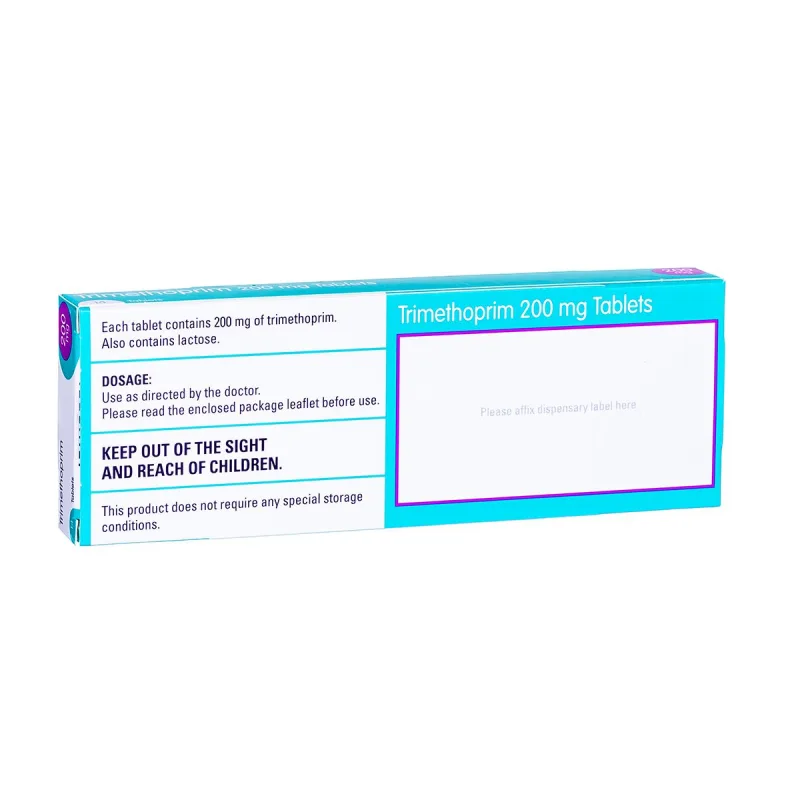

Images are for illustration only.
Trimethoprim 200mg Tablets
Trimethoprim 200mg is an antibiotic for uncomplicated cystitis in women: one tablet twice a day for 3 days. It's used when nitrofurantoin isn't suitable. Prescription-only.
Free online assessment with a UK prescriber



Trimethoprim is an antibiotic used to treat cystitis, a bladder infection. For most women with uncomplicated cystitis the course is one 200mg tablet twice a day for 3 days. It's usually used when nitrofurantoin, the first choice, isn't suitable. At MedsRus, a UK prescriber reviews a confidential online consultation before supplying it.
Trimethoprim at a glance
| Details | |
|---|---|
| Active ingredient | Trimethoprim |
| Strength | 200mg tablets |
| Used for | Uncomplicated cystitis (lower urinary tract infection) in women |
| How to take it | One tablet twice a day, with or without food |
| Usual course | 3 days (6 tablets) |
| May not work if | You've taken trimethoprim in the last 3 months |
| Not for | Kidney infections, or cystitis in pregnancy |
| Supply | Prescription-only, after an online consultation |
Is it cystitis?
Typical cystitis symptoms are:
- burning or stinging when you pee;
- needing to pee more often or more urgently than usual;
- cloudy or strong-smelling urine;
- pain or discomfort low in your tummy.
Get same-day medical help instead (GP or NHS 111) if you have pain in your back or side, a high temperature, shivering, feel sick or are being sick, or feel confused or very unwell, especially if you also see blood in your pee. These can be signs of a kidney infection, which needs to be checked and treated differently.
Not sure which you have? Our guides to cystitis vs UTI and kidney infection vs UTI symptoms explain the difference.
How trimethoprim works
Bacteria need folate (a B vitamin) to make DNA and multiply. Trimethoprim blocks the step bacteria use to turn folate into the form they need, so they stop growing and your body can clear the infection.
How to take trimethoprim
- Take one 200mg tablet twice a day, morning and evening, with a glass of water. You can take it with or without food.
- Space your doses evenly through the day.
- For most women with uncomplicated cystitis the course is 3 days. Your prescriber may give a longer course in some situations.
- Finish the course, even if you feel better sooner.
- Missed a dose? Take it as soon as you remember, unless your next dose is nearly due. Don't take two doses together.
- Taken too much? Contact your doctor or NHS 111 for advice.
How quickly does it work?
Many women notice their symptoms easing within 24 hours, and the infection usually clears within 3 days. If you're not improving after 48 hours, or you feel worse at any point, contact a GP or NHS 111.
Side effects
Common side effects include:
- feeling sick;
- diarrhoea;
- an itchy rash;
- headache.
Stop taking it and get medical help straight away if you have a severe rash, or blistering or peeling skin; a sore throat with a fever, or mouth ulcers (these can be signs of a blood problem); unexplained bruising or bleeding; or yellow skin or eyes. Call 999 if you have swelling of the lips, face or throat, or difficulty breathing.
Who shouldn't take trimethoprim?
Trimethoprim isn't suitable if you:
- are pregnant, especially in the first 3 months, or could be pregnant;
- have low folate levels (folate deficiency) or a blood disorder;
- have severe kidney or liver problems;
- are allergic to trimethoprim.
Speak to us first if you're breastfeeding, or have any kidney problems.
Taken trimethoprim in the last 3 months? It may not work this time, because the bacteria are more likely to be resistant to it. Tell us, as a different antibiotic may be better.
Our online service is for women aged 16 to 64 with uncomplicated cystitis. Men with urinary symptoms, and anyone who is pregnant, should see a GP, as they need a urine test first.
Medicines to check
Don't take trimethoprim if you take methotrexate. Together they can cause serious problems with your blood cells.
Tell us if you take:
- warfarin;
- phenytoin;
- digoxin;
- an ACE inhibitor (such as ramipril) or an ARB (such as losartan), spironolactone or potassium supplements, as trimethoprim can raise the potassium level in your blood;
- ciclosporin.
Trimethoprim or nitrofurantoin?
NICE recommends nitrofurantoin as the first choice for most women with uncomplicated cystitis, as long as their kidneys work well. Trimethoprim is an alternative when nitrofurantoin isn't suitable and the risk of the bacteria being resistant is low, for example when you haven't taken trimethoprim recently. The prescriber will choose the one that suits you. Read more about nitrofurantoin MR capsules.
For self-care and the other treatment options, see our cystitis and UTI treatment page.
How MedsRus prescribes trimethoprim
- Complete a confidential online consultation about your symptoms, health and medicines.
- A UK prescriber reviews it and approves trimethoprim if it's suitable, or advises you to see a GP if your symptoms need checking in person.
- Your tablets are dispensed by our UK pharmacy and sent in plain packaging.
Trimethoprim FAQs
How quickly does trimethoprim work?
Many women feel better within 24 hours, and the infection usually clears within 3 days. Keep taking it for the full course. If you're no better after 48 hours, or you feel worse at any point, contact a GP or NHS 111.
Can I drink alcohol with trimethoprim?
Yes, drinking in moderation is fine. Alcohol doesn't stop trimethoprim working, but plenty of water is better for your bladder while you recover.
Is trimethoprim or nitrofurantoin better for cystitis?
Nitrofurantoin is usually the first choice. Trimethoprim works well when the bacteria aren't resistant to it, so it's used when nitrofurantoin isn't suitable and you haven't taken trimethoprim in the last 3 months. The prescriber will decide which suits you.
Can I take trimethoprim if I'm pregnant?
Trimethoprim is usually avoided in pregnancy, especially in the first 3 months, because it affects folate. If you're pregnant and have symptoms of cystitis, see your GP or midwife. You'll need a urine test and an antibiotic that's suitable in pregnancy.
What if my symptoms come back?
Contact a GP if your symptoms come back within a few weeks of finishing the course, or you keep getting cystitis. You may need a urine test to find an antibiotic that works. Get help the same day if you have back or side pain, a high temperature or shivering.
Sources: