


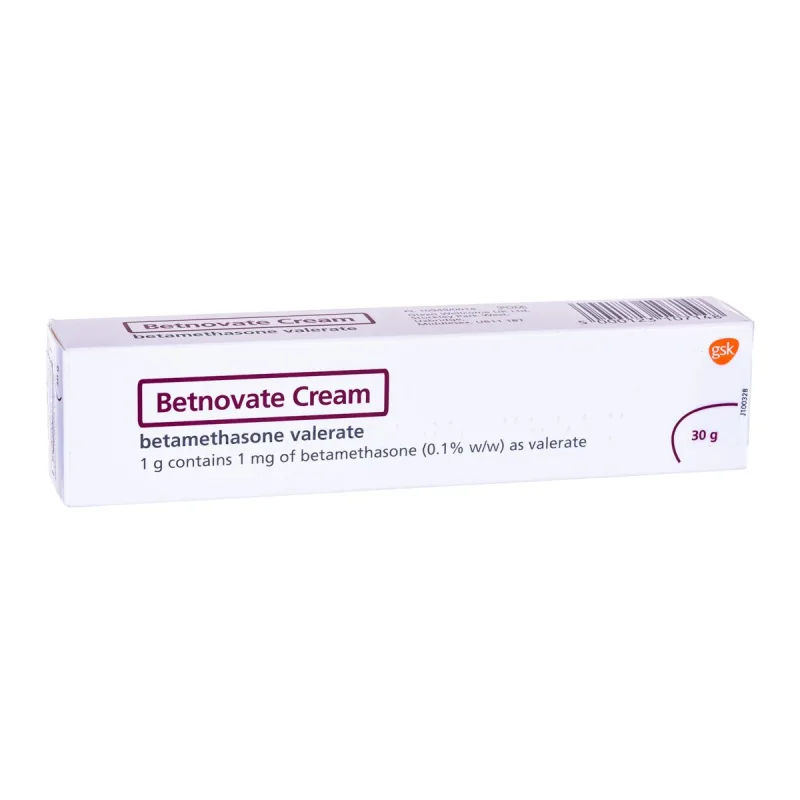
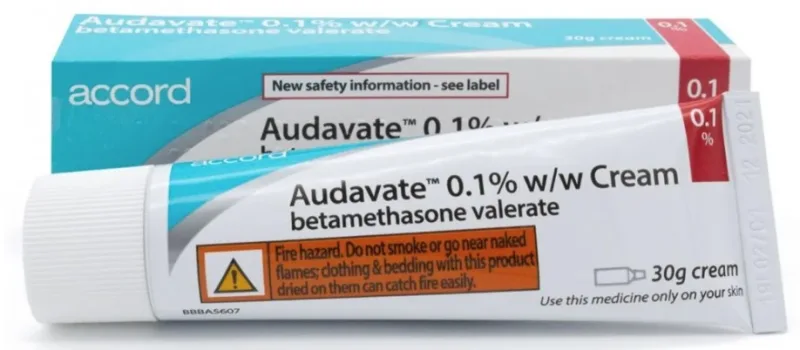
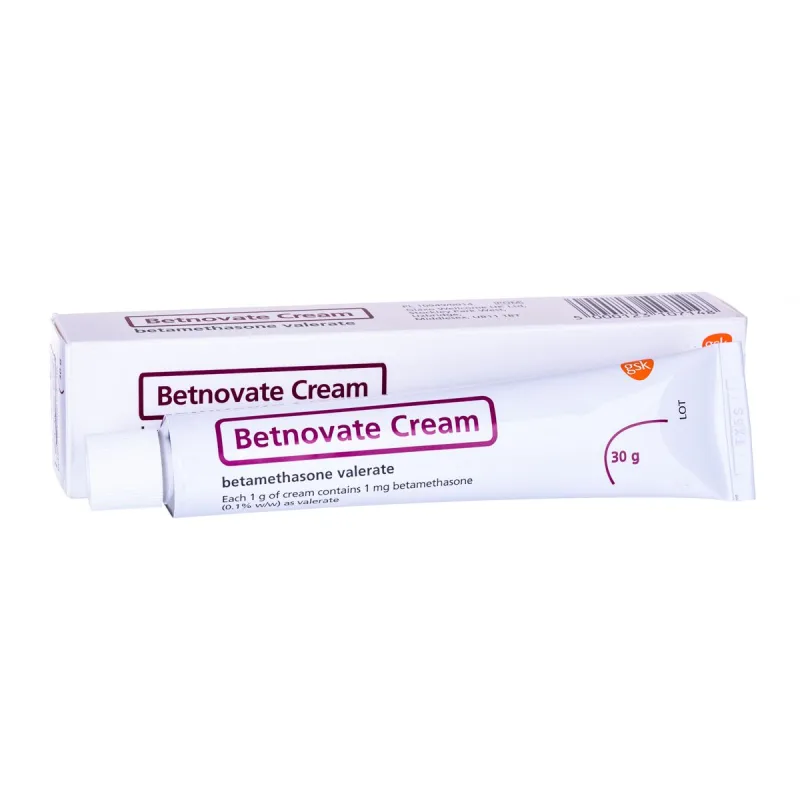
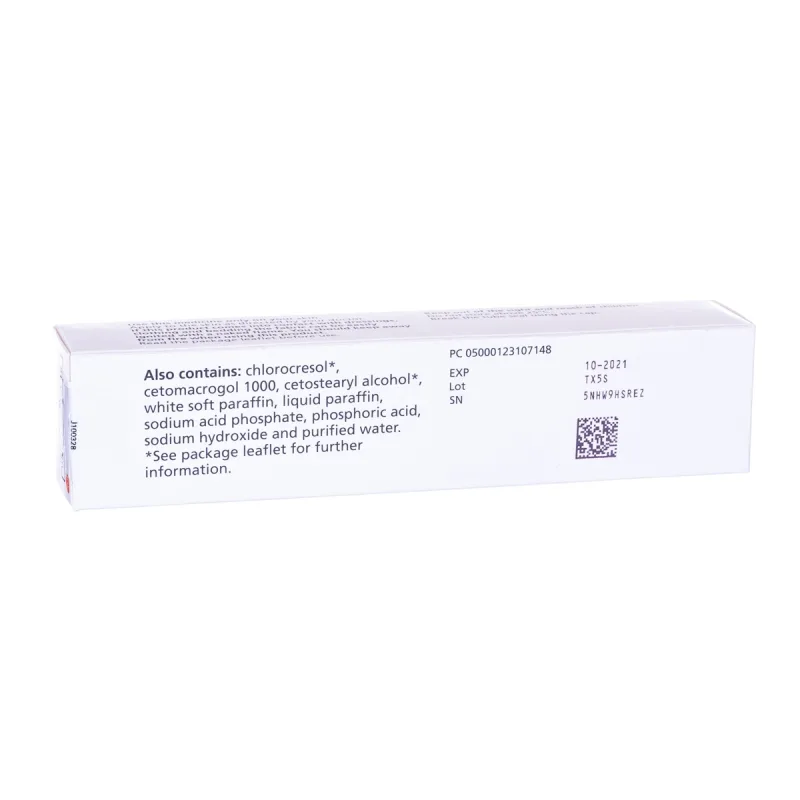
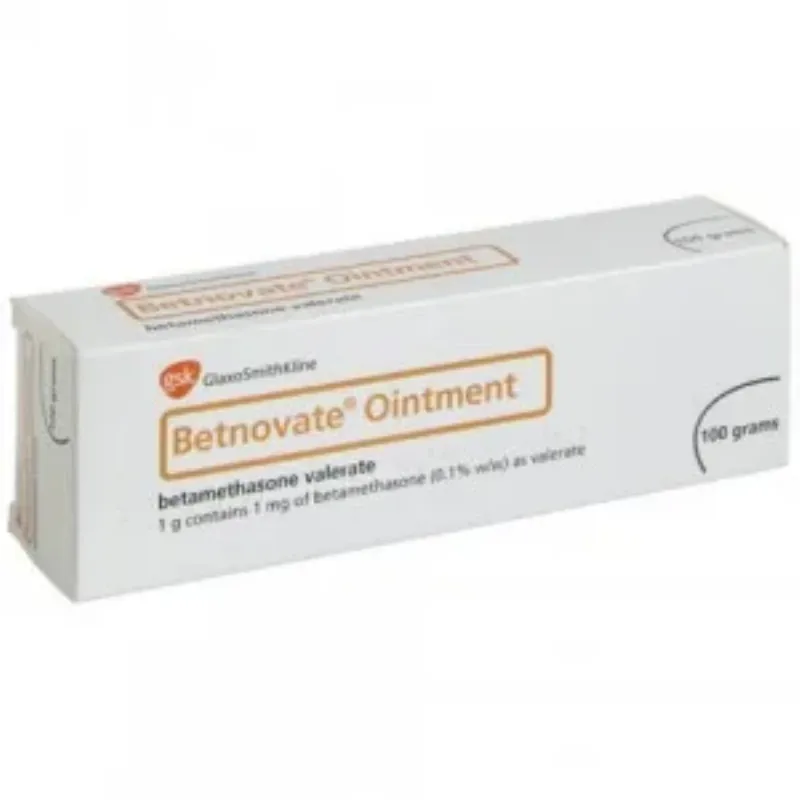
Images are for illustration only.
Betnovate Cream
Betnovate contains betamethasone valerate 0.1%, a potent steroid that reduces the inflammation, redness and itching of eczema, psoriasis and dermatitis. Available as a cream or ointment. Please note: depending on stock, we may supply an equivalent betamethasone valerate 0.1% brand. If you need the Betnovate brand specifically, please contact the pharmacy before you order.
Free online assessment with a UK prescriber



Betnovate is the original brand of betamethasone valerate 0.1%, a potent steroid that calms flare-ups of eczema, psoriasis and dermatitis. We supply it as a cream or an ointment. It's a prescription medicine, so a UK prescriber reviews a short online consultation before we send it.
For emollients, the fingertip unit and when to see a GP, see our guide to eczema and psoriasis treatment.
Betnovate at a glance
| Details | |
|---|---|
| Active ingredient | Betamethasone valerate 0.1% |
| Strength | Potent topical steroid |
| Forms we supply | Cream or ointment, 30g or 100g |
| Used for | Flare-ups of eczema, psoriasis and dermatitis on the body |
| How often | A thin layer once or twice a day, usually for up to 4 weeks |
| Prescription needed | Yes |
How does Betnovate work?
Eczema, psoriasis and dermatitis all involve inflammation in the skin, which makes it red, swollen and itchy. Betnovate contains a corticosteroid that switches down that inflammation in the skin cells, so the flare settles and the skin can start to heal.
Betnovate cream or ointment?
- Ointment is greasy and stays on the skin longer. It suits very dry, thick or scaly patches, such as psoriasis plaques, and is good at night.
- Cream is lighter and rubs in quickly. It suits moist or weeping patches, hairy areas and daytime use.
Both contain the same amount of betamethasone. If you're unsure, the prescriber can suggest which suits your skin.
How to use Betnovate
- Spread a thin layer over the affected skin once or twice a day and rub it in gently.
- Use your usual emollient as well, but leave about 30 minutes between the two.
- Once the flare settles, usually within 4 weeks, stop or move to a milder steroid as your prescriber advises.
- Don't put a dressing or bandage over it unless a doctor has told you to.
- Wash your hands afterwards, unless you're treating your hands, and keep it away from your eyes, nose and mouth.
Don't use Betnovate on your face, groin or armpits unless a doctor has told you to. The skin there is thinner and absorbs more steroid.
Side effects of Betnovate
Short courses used as directed rarely cause problems. Some people notice brief burning or itching where it's applied. Using it for a long time, on large areas or under dressings can thin the skin and cause stretch marks, visible small blood vessels or paler patches. Very rarely, heavy long-term use can affect the body's own steroid hormones.
Stop and speak to a pharmacist or GP if your skin gets worse, looks infected, or you develop a rash or swelling that might be an allergy.
Topical steroid withdrawal
The MHRA has warned that, rarely, people who have used a steroid on their skin for a long time get burning, redness and peeling when they stop. Use it for the shortest time needed, and talk to a prescriber if you've been using it continuously for months.
Who shouldn't use Betnovate?
Betnovate isn't suitable for:
- acne, rosacea or perioral dermatitis;
- untreated skin infections, including cold sores, chickenpox, fungal infections and impetigo;
- broken skin or leg ulcers;
- itching where the skin isn't inflamed, including itching around the anus or genitals on its own;
- anyone allergic to betamethasone or the other ingredients.
Our online service supplies Betnovate to adults aged 18 to 65. If you're pregnant, trying to get pregnant or breastfeeding, speak to your GP or midwife first. If you use it while breastfeeding, don't apply it to the breast. Betnovate isn't known to interact with other medicines, but tell the prescriber about anything else you use.
Betnovate or generic betamethasone?
Betamethasone valerate 0.1% cream is the generic version of Betnovate cream: same medicine, same strength, usually a lower price. For psoriasis or eczema on the scalp, Betacap scalp application contains the same steroid as a liquid.
How to get Betnovate from MedsRus
- Complete a short consultation about your skin, where it's affected and what you've already tried. You may be asked for a photo.
- A UK prescriber reviews it and, if Betnovate is suitable, approves it and tells you how long to use it.
- We send it in discreet packaging.
Betnovate FAQs
Is Betnovate the same as betamethasone cream?
Yes, it's the same medicine at the same strength: betamethasone valerate 0.1%. Betnovate is the original brand, and generic betamethasone cream usually costs less. They work in exactly the same way.
Should I choose Betnovate cream or ointment?
Ointment is greasier and suits very dry, thickened or scaly skin, such as psoriasis plaques. Cream is lighter, rubs in more easily and suits moist or weeping patches and daytime use.
Can I use Betnovate on my face?
Not unless a doctor has told you to. Betnovate is a potent steroid and can thin the delicate skin on the face or cause redness and spots.
How long can I use Betnovate for?
Usually for no more than 4 weeks at a time, then stop or step down to a milder steroid once the flare has settled. Speak to a prescriber if you keep needing it.
Is Betnovate good for eczema?
It's commonly prescribed for flare-ups of eczema on the body that haven't settled with emollients or a milder steroid, used in short courses alongside a daily emollient.
Sources: