


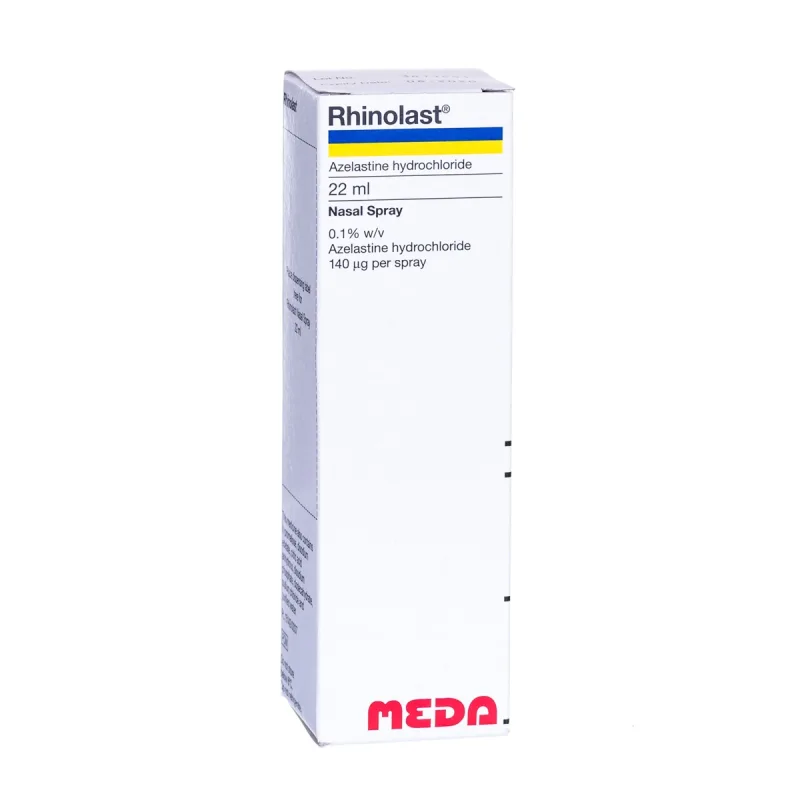
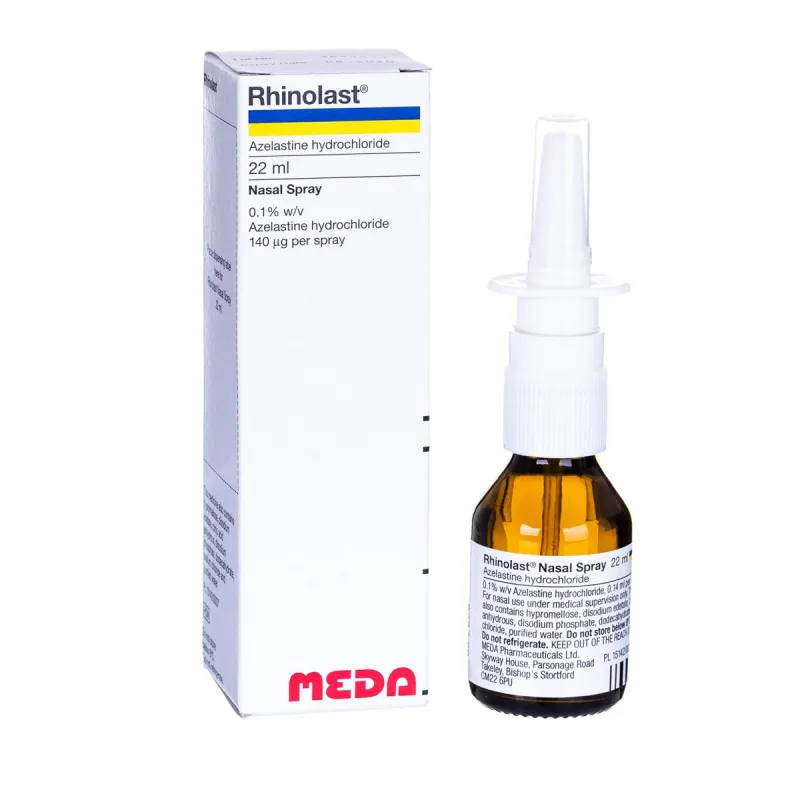
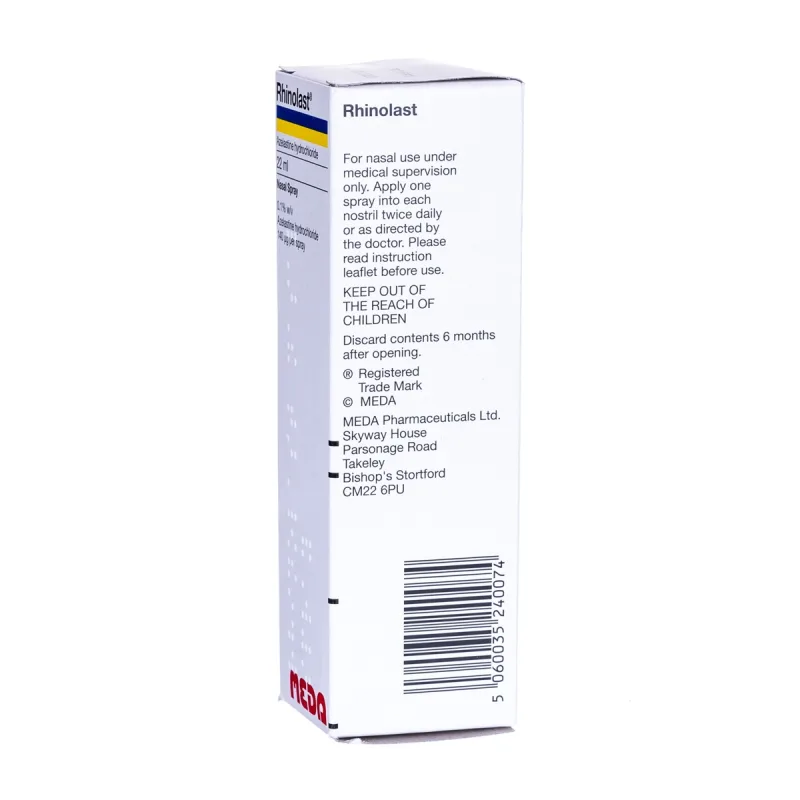
Images are for illustration only.
Rhinolast Nasal Spray
Rhinolast is a prescription antihistamine nasal spray containing azelastine. It eases sneezing, itching and a runny nose from hay fever and year-round allergies. The usual dose is one spray into each nostril twice a day.
Free online assessment with a UK prescriber



Rhinolast is a prescription antihistamine nasal spray containing azelastine. It eases sneezing, itching and a runny nose caused by hay fever and year-round allergies, such as to dust mites or pets. The usual dose is one spray into each nostril twice a day. A UK prescriber reviews a short online consultation before supplying it.
Rhinolast at a glance
| Details | |
|---|---|
| Active ingredient | Azelastine hydrochloride (an antihistamine) |
| Used for | Hay fever and year-round allergic rhinitis |
| Dose | One spray into each nostril twice a day, morning and evening |
| Starts working | Quickly, often within an hour |
| Age | Adults and children aged 6 and over |
| Prescription needed | Yes |
How does Rhinolast work?
When you breathe in something you're allergic to, such as pollen, dust mites or pet dander, your body releases histamine. Histamine causes the sneezing, itching and runny nose of an allergy. Azelastine blocks histamine where it acts inside the nose, so symptoms settle. Because it works directly in the nose, it acts quickly.
How to use Rhinolast
Adults and children aged 6 and over: one spray into each nostril twice a day, morning and evening. Use it regularly during your allergy season, or for as long as you're exposed to the allergen.
- Blow your nose gently.
- If the spray is new, or you haven't used it for a few days, prime the pump as the leaflet explains.
- Keep your head upright. Don't tilt it back.
- Put the nozzle just inside one nostril and close the other with a finger.
- Spray once as you breathe in gently through your nose. Don't sniff hard.
- Repeat in the other nostril, then wipe the nozzle.
Keeping your head upright helps stop the spray running down the back of your throat, which is what causes the bitter taste some people notice. If your symptoms aren't better after 2 weeks, speak to us or your GP.
Side effects of Rhinolast
- Common: a bitter taste in the mouth, especially if you tip your head back, which can sometimes make you feel sick.
- Drowsiness: it can make some people sleepy. Don't drive or use machinery if it affects you, and avoid alcohol.
- Uncommon: irritation or itching inside the nose, sneezing straight after using it, and nosebleeds.
Stop using it and get medical advice if you get a rash, hives or itching all over. Call 999 if you have swelling of the face, lips or throat, or difficulty breathing.
Who shouldn't use Rhinolast?
Rhinolast isn't for children under 6, or anyone allergic to azelastine or any of the other ingredients. Speak to us or your GP before using it if you're pregnant or breastfeeding. It doesn't usually interact with other medicines, but tell the prescriber about everything you take, especially other medicines that can make you drowsy.
Which nasal spray?
| Spray | Type | Best for | How quickly it works |
|---|---|---|---|
| Rhinolast (azelastine) | Antihistamine | Sneezing, itching and a runny nose; sudden symptoms | Often within an hour |
| Beconase or Avamys | Steroid | A blocked nose and ongoing symptoms | Builds up over a few days |
| Dymista | Antihistamine and steroid together | Symptoms not controlled by one type alone | Often within an hour, building over days |
For itchy, watery eyes, azelastine also comes as eye drops (Optilast). Our hay fever and allergy treatment page compares tablets, sprays and eye drops.
How to get Rhinolast from MedsRus
- Complete a short online consultation about your symptoms, your health and any medicines you take.
- A UK prescriber reviews it and, if Rhinolast is suitable, approves your treatment.
- We send it in discreet packaging.
Rhinolast FAQs
How quickly does Rhinolast work?
It starts to work quickly, often within an hour, so it's useful for sneezing and a runny nose that come on suddenly. For the best effect during your allergy season, use it regularly twice a day.
Rhinolast or Beconase: which should I use?
They work differently. Rhinolast is an antihistamine and acts quickly on sneezing, itching and a runny nose. Beconase is a steroid spray that works better for a blocked nose but takes a few days of regular use to build up. The prescriber can suggest which suits your symptoms.
Can I use Rhinolast with antihistamine tablets?
Sometimes, for example if your eyes are also itchy, but tell the prescriber about every medicine you take, as the drowsiness can add up.
Does Rhinolast make you drowsy?
It can. Azelastine makes some people feel sleepy. Don't drive or use machinery if it affects you, and avoid alcohol.
Can children use Rhinolast?
Children aged 6 and over can use it at the same dose as adults. It isn't for children under 6.
Sources: