


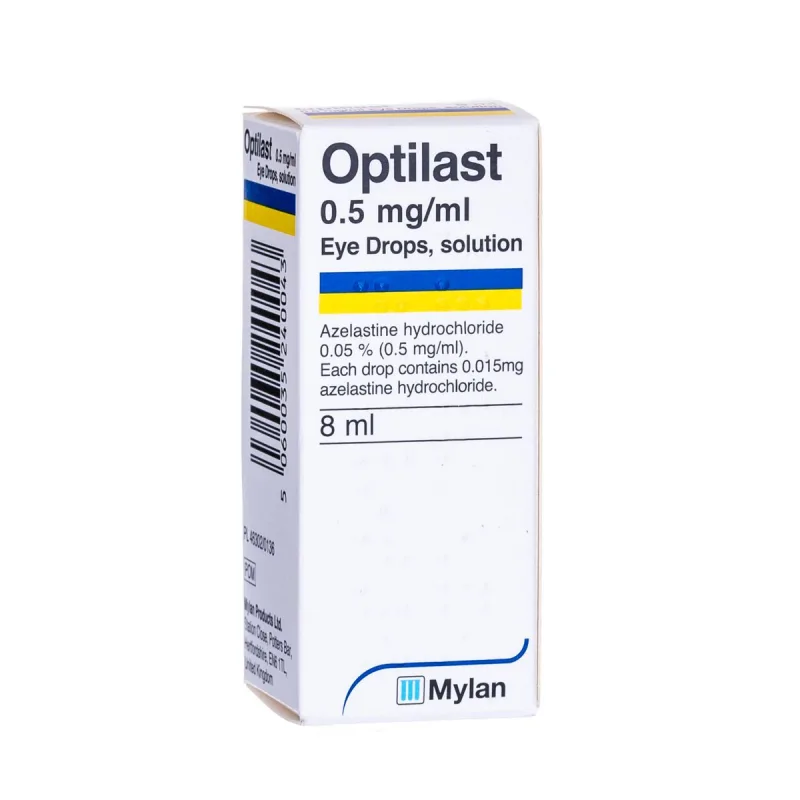
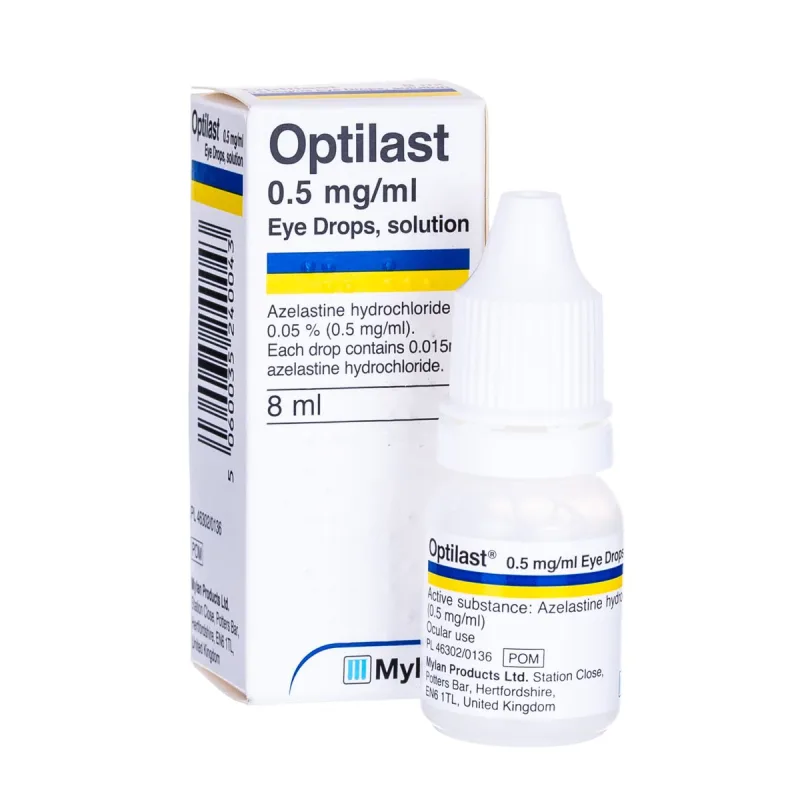
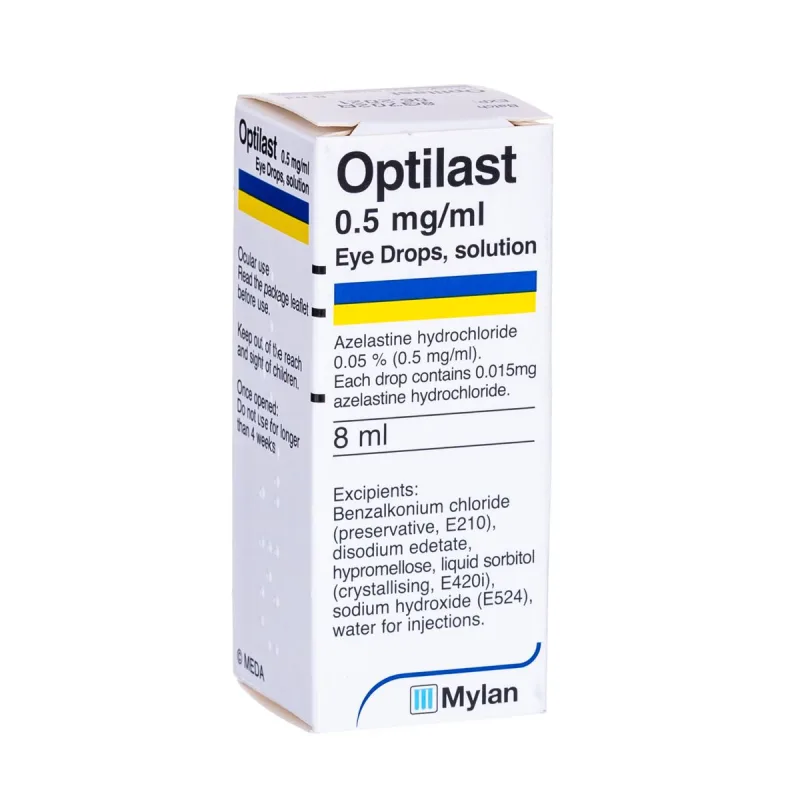
Images are for illustration only.
Optilast Eye Drops
Optilast (azelastine 0.05%) is a prescription antihistamine eye drop for itchy, red, watery eyes from hay fever. One drop in each eye twice a day.
Free online assessment with a UK prescriber



Optilast eye drops contain azelastine hydrochloride 0.05%, an antihistamine that relieves itchy, red and watery eyes caused by hay fever and other allergies (allergic conjunctivitis). You use one drop in each eye twice a day. Optilast is a prescription-only medicine, so a UK prescriber registered with the General Pharmaceutical Council reviews a short online consultation first.
Optilast at a glance
| Details | |
|---|---|
| Active ingredient | Azelastine hydrochloride 0.05% |
| Pack | 8ml bottle |
| Used for | Itchy, red, watery eyes from hay fever or year-round allergies |
| Usual dose | One drop in each eye, twice a day |
| Age | 4 and over for hay fever; 12 and over for year-round allergies |
| Contact lenses | Remove before use; wait 15 minutes |
| Supply | Prescription-only, after an online consultation |
How does Optilast work?
When you come into contact with something you're allergic to, such as pollen, dust mites or pet hair, your body releases histamine. Histamine makes the eyes itchy, red, swollen and watery. Azelastine blocks histamine in the eye, so these symptoms ease.
How to use Optilast
Use one drop in each eye twice a day, morning and evening. If your symptoms are bad, the prescriber may advise up to four times a day. For year-round allergies, check with us if you need it for longer than 6 weeks.
- Wash your hands.
- Tilt your head back and gently pull down your lower eyelid.
- Squeeze one drop into the gap between your eyelid and eye, without letting the tip touch your eye or skin.
- Close your eye and press gently on the inner corner, near your nose, for about a minute.
- Repeat in the other eye and put the cap back on.
Take out contact lenses before using the drops and wait at least 15 minutes before putting them back in.
Side effects
- Common: a bitter taste in your mouth, and mild stinging or irritation when you put the drops in.
- Uncommon: blurred vision for a short time after use. Don't drive or use machinery until it clears.
When to get medical advice
See a GP, optician or call NHS 111 if you have:
- eye pain, or changes in your vision;
- sensitivity to light;
- a sticky or yellow discharge;
- only one eye affected and it's very red;
- symptoms that don't improve after a few days of using the drops.
These can be signs of an infection or another eye problem that antihistamine drops won't treat.
Who shouldn't use Optilast?
- Anyone allergic to azelastine or any of the other ingredients, including benzalkonium chloride.
- Children under 4, or under 12 for year-round allergies.
Tell the prescriber if you're pregnant or breastfeeding, or if you have any other eye condition.
Other options
For mild symptoms, pharmacy eye drops such as sodium cromoglicate, or a once-a-day antihistamine tablet such as fexofenadine, cetirizine or loratadine, may be enough. If your nose is also blocked or runny, Dymista nasal spray contains azelastine with a steroid. Our page on hay fever and allergy treatment compares the options.
How to get Optilast from MedsRus
- Answer a few questions about your symptoms, your health and any medicines you use.
- A UK prescriber registered with the General Pharmaceutical Council reviews them and, if Optilast is suitable, issues a prescription.
- Our UK pharmacy sends it in discreet packaging.
Optilast FAQs
How quickly does Optilast work?
Many people notice their eyes feel less itchy within an hour of the first drop. Use it regularly, twice a day, while you're exposed to the allergen.
Can I use Optilast with contact lenses?
Take your lenses out before using the drops and wait at least 15 minutes before putting them back in. The drops contain a preservative that soft lenses can absorb. Don't wear lenses while your eyes are red or sore.
Can I use Optilast with antihistamine tablets?
Yes. Many people with hay fever use eye drops alongside a once-a-day antihistamine tablet or a nasal spray. Tell the prescriber what else you're using.
How long does a bottle last once opened?
Use it within 4 weeks of opening, then throw the bottle away, even if there's some left.
Can children use Optilast?
Children aged 4 and over can use it for hay fever, and children aged 12 and over for year-round allergies. For children, an adult should put the drops in.
Sources: