


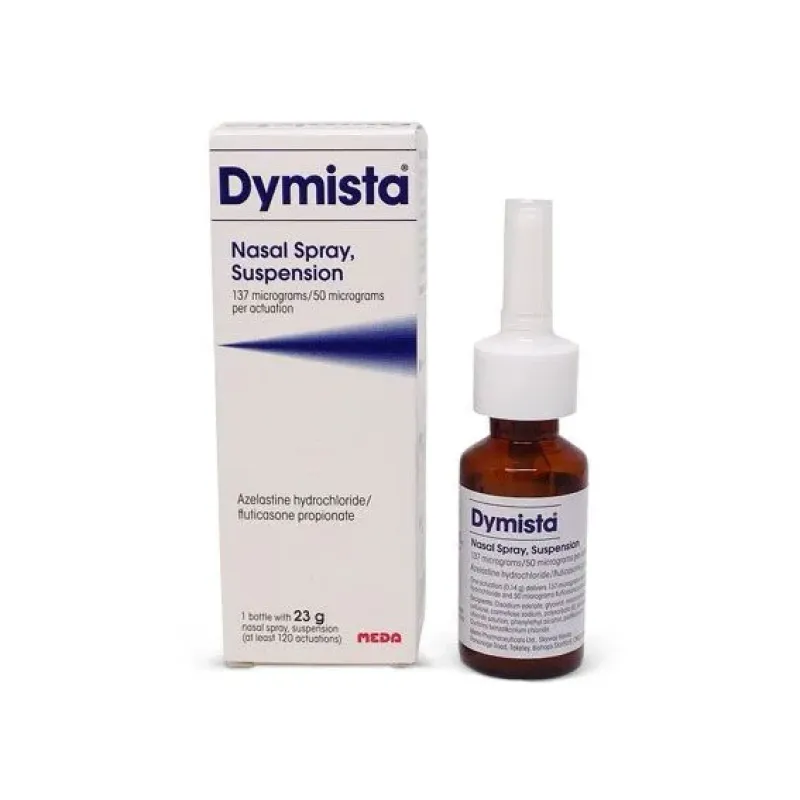
Images are for illustration only.
Dymista Nasal Spray
Dymista is a prescription nasal spray for moderate to severe hay fever and year-round allergic rhinitis. It combines an antihistamine (azelastine) with a steroid (fluticasone) for people whose symptoms aren't controlled by one alone.
Free online assessment with a UK prescriber



Dymista is a prescription nasal spray for moderate to severe hay fever and year-round allergic rhinitis. It combines an antihistamine (azelastine) with a steroid (fluticasone propionate). Adults and children aged 12 and over use one spray in each nostril twice a day. At MedsRus, a UK prescriber reviews a short online consultation before supplying it.
Dymista at a glance
| Details | |
|---|---|
| Active ingredients | Azelastine (antihistamine) and fluticasone propionate (steroid) |
| Used for | Moderate to severe hay fever and year-round allergic rhinitis |
| Dose | One spray in each nostril twice a day (morning and evening) |
| Maximum | The same: one spray in each nostril twice a day |
| Age | 12 and over |
| Prescription needed | Yes |
How does Dymista work?
When you breathe in something you're allergic to, such as pollen, dust mites or pet dander, your body releases histamine and other chemicals that make the inside of your nose swell and run. Dymista tackles this in two ways:
- Azelastine blocks histamine, easing sneezing, itching and a runny nose. It often starts to work within an hour.
- Fluticasone is a steroid that calms the swelling and inflammation inside the nose. It builds up over a few days of regular use.
What is Dymista used for?
Dymista treats the symptoms of allergic rhinitis: a blocked or runny nose, sneezing and itching. This can be seasonal, like hay fever, or year-round, from dust mites or animals. It's meant for people whose symptoms aren't controlled well enough by a steroid spray or an antihistamine on its own.
Dymista treats allergic symptoms. It isn't a treatment for sinusitis or a cold.
How to use Dymista
Adults and children aged 12 and over: one spray into each nostril twice a day, morning and evening. Don't use more than this.
- Blow your nose gently.
- Shake the bottle gently. If it's new, or you haven't used it for a while, prime the pump as the leaflet explains.
- Tilt your head slightly forward, not back.
- Put the nozzle just inside one nostril and close the other with a finger.
- Aim the spray slightly away from the middle of your nose, and spray once as you breathe in gently. Don't sniff hard.
- Repeat in the other nostril, then wipe the nozzle.
Good technique helps reduce nosebleeds and the bitter taste some people notice. Use it regularly during your allergy season. If your symptoms aren't better after 2 weeks, speak to us or your GP.
Side effects of Dymista
- Common: nosebleeds, headache, a bitter or unpleasant taste (more likely if you tip your head back), irritation inside the nose.
- Drowsiness: it can make some people drowsy. Don't drive or use machinery if it affects you, and avoid alcohol.
- Rare: blurred vision or eye pain. See a doctor if this happens.
Using steroid sprays at high doses for a long time can, rarely, affect growth in young people, which is why it's important to stick to the dose.
Who shouldn't use Dymista?
Dymista isn't for children under 12. Speak to us or your GP before using it if you:
- have had a recent nose operation or injury, or have a nasal infection;
- have tuberculosis or any untreated infection;
- have glaucoma, cataracts or changes to your vision;
- have problems with your adrenal glands, or severe liver disease;
- are allergic to azelastine or fluticasone;
- are pregnant or breastfeeding.
Medicines to check
Some medicines increase the amount of steroid that gets into your body. Tell the prescriber if you take ritonavir or cobicistat (used for HIV), or antifungals such as ketoconazole or itraconazole. Mention any other steroid medicines too, including inhalers and tablets.
How Dymista compares with other hay fever treatments
A steroid spray on its own, such as Avamys or Beconase, is usually tried first. If that isn't enough, Dymista adds an antihistamine in the same spray. For itchy, watery eyes, an antihistamine tablet such as fexofenadine may help as well. Our hay fever and allergy treatment page compares the options.
How to get Dymista from MedsRus
- Complete a short online consultation about your symptoms, your health and any medicines you take.
- A UK prescriber reviews it and, if Dymista is suitable, approves your treatment.
- We send it in discreet packaging.
Dymista FAQs
Is Dymista better than Avamys?
Dymista isn't better for everyone. It adds an antihistamine to a steroid, so it's usually used when a steroid spray such as Avamys hasn't controlled symptoms on its own.
How long does Dymista take to work?
The antihistamine often starts to help within an hour. The steroid builds up over a few days, so use it every day for the best effect.
Can I use Dymista every day?
Yes. It works best when used every day during your allergy season, at one spray in each nostril twice a day. If symptoms aren't better after 2 weeks, speak to us or your GP.
Does Dymista make you drowsy?
It can. Azelastine makes some people drowsy. Don't drive or use machinery if it affects you, and avoid alcohol.
Can I use Dymista with antihistamine tablets?
Usually yes, for example if your eyes are also itchy, but tell the prescriber about every medicine you take, as the drowsiness can add up.
Sources: