


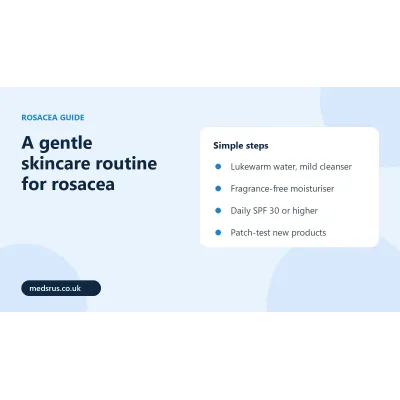
Skin affected by rosacea is often sensitive. It can sting, burn or flush with products that other people use without a problem. A simple, gentle routine won't cure rosacea, but it can reduce irritation, protect the skin barrier and help your treatment work better.
A simple routine
Morning
- Cleanse gently with lukewarm water and a mild, soap-free, fragrance-free cleanser, or just water if your skin is very sensitive. Use your fingertips, not a flannel or brush, and pat dry with a soft towel.
- Apply any prescribed treatment as directed, and let it dry.
- Moisturise with a fragrance-free moisturiser.
- Use sunscreen with SPF 30 or higher and UVA protection, every day. Many people with rosacea find mineral sunscreens (zinc oxide or titanium dioxide) less irritating.
Evening
- Cleanse gently to remove sunscreen and make-up.
- Apply any prescribed treatment as directed.
- Moisturise.
Fewer products usually means less irritation. If your prescriber hasn't told you what order to use your treatment and moisturiser in, ask them.
Ingredients that often irritate rosacea
- alcohol (often listed as alcohol denat. or ethanol)
- fragrance and perfume, including essential oils
- menthol, camphor and eucalyptus
- witch hazel
- physical scrubs and exfoliating brushes
- strong exfoliating acids such as glycolic acid, unless advised by a prescriber
- retinol and retinoid products, unless advised by a prescriber
- steroid creams on the face, which can make rosacea worse
How to patch test new products
Before using a new product on your whole face, apply a small amount to an area near your jawline or behind your ear once a day for a few days. If there's no stinging, redness or itching, it's more likely to suit you. Introduce one new product at a time so you can tell what causes a reaction.
Make-up
- Choose make-up labelled fragrance-free and non-comedogenic.
- A green-tinted primer or concealer can help neutralise redness.
- Mineral powder make-up is often well tolerated.
- Remove make-up gently each evening with your usual cleanser.
Protecting your skin day to day
- Wear a wide-brimmed hat in strong sun and a scarf in cold wind.
- Avoid very hot water when washing your face.
- Keep a note of products that cause problems, alongside other rosacea triggers.
A good routine works best alongside treatment. Our rosacea treatment page explains the options we offer. See a GP if your skin keeps getting worse or your eyes become sore, gritty or red.
Frequently asked questions
What is the best cleanser for rosacea?
A mild, soap-free and fragrance-free cleanser used with lukewarm water and your fingertips is usually best. Avoid scrubs, brushes and products containing alcohol.
Should I use sunscreen every day if I have rosacea?
Yes. Sunlight is one of the most common triggers. Use a broad-spectrum sunscreen of SPF 30 or higher every day. Mineral sunscreens are often better tolerated.
Can I use retinol if I have rosacea?
Retinol and other retinoids often irritate rosacea-prone skin. Only use them if a prescriber or dermatologist advises it.
Is niacinamide good for rosacea?
Some people find low-strength niacinamide moisturisers soothing, but others find it irritating. Patch test first and stop if your skin stings or reddens.
Sources: