


Rosacea is a long-term skin condition that mainly affects the face. It causes flushing, persistent redness, visible small blood vessels and, for some people, spots. There's no cure, but most people find that certain things make it flare. Learning your own triggers is one of the most useful things you can do alongside treatment.
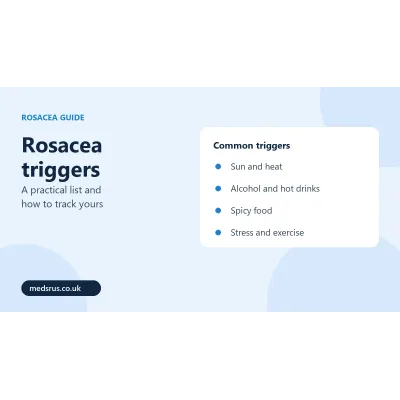
The most common triggers
- Sunlight: one of the most frequently reported triggers, even on cool or cloudy days.
- Heat: hot weather, hot baths, saunas, heaters and sitting near a fire.
- Cold and wind: cold weather can dry and irritate the skin, and moving from cold to warm rooms can cause flushing.
- Alcohol: especially red wine for many people.
- Hot drinks: it's often the heat, not the caffeine, that causes flushing. Letting tea or coffee cool a little can help.
- Spicy food: chilli and other hot spices.
- Exercise: particularly hard exercise in a warm environment.
- Stress and strong emotions: embarrassment, anxiety and anger can all cause flushing.
- Skincare and make-up: products containing alcohol, fragrance, menthol, witch hazel or harsh exfoliants.
- Some medicines: steroid creams on the face can make rosacea worse. Some blood pressure medicines can cause flushing. Don't stop a prescribed medicine without advice.
Not everyone reacts to the same things, and you don't need to avoid every item on this list. The aim is to find the few that matter for you.
How to keep a trigger diary
- For two to four weeks, note each day what you ate and drank, the weather, your activities, stress levels and any new products.
- Rate your redness or flushing each day, for example from 0 to 5.
- Look back for patterns. A trigger usually causes a flare within minutes to hours.
- Test a suspected trigger by avoiding it for a couple of weeks, then reintroducing it.
Ways to reduce flare-ups
- Use a broad-spectrum sunscreen of SPF 30 or higher every day, and wear a wide-brimmed hat in strong sun.
- Keep cool: sip cold water, use a fan, and choose warm rather than hot showers.
- Protect your face from cold wind with a scarf.
- Choose gentle, fragrance-free skincare. Our guide to a skincare routine for rosacea has more detail.
- Try lower-alcohol drinks or alternate with water, and notice whether some drinks affect you more than others.
- Find ways to manage stress that work for you, such as exercise in a cool environment, breathing techniques or talking therapies.
When avoiding triggers isn't enough
Avoiding triggers can reduce flare-ups but won't usually clear rosacea on its own. Treatments are available for persistent redness and for spots, including creams and gels such as azelaic acid, ivermectin and metronidazole, gels that reduce redness, and antibiotic tablets for more severe spots. Laser or light treatment can help visible blood vessels, though it's not usually available on the NHS. Our rosacea treatment page explains the options we offer.
See a GP if your eyes are sore, gritty or red, as rosacea can affect the eyes, or if your skin is getting worse despite treatment.
Frequently asked questions
What is the most common rosacea trigger?
Sunlight is one of the most commonly reported triggers. Heat, alcohol, spicy food, hot drinks and stress are also common, but triggers vary from person to person.
Does coffee trigger rosacea?
For many people it's the heat of the drink rather than the caffeine that causes flushing. Letting hot drinks cool a little before drinking can help.
Can stress cause rosacea flare-ups?
Yes. Stress, anxiety and embarrassment can all cause flushing and make rosacea flare.
Will avoiding triggers cure rosacea?
No. Avoiding triggers can reduce flare-ups, but rosacea is a long-term condition and most people also need treatment to control redness or spots.
Sources: