


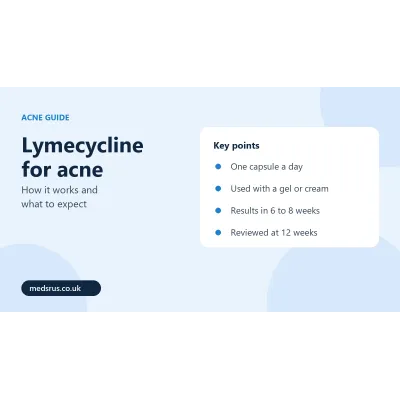
Lymecycline is an antibiotic capsule used for moderate to severe acne. It belongs to the tetracycline family, along with doxycycline. It's taken once a day and is always used together with a topical treatment such as a gel or cream.
This guide covers how it works, how to take it, and what to expect over the course.
How lymecycline works
Lymecycline reduces the number of acne bacteria in the skin and also has an anti-inflammatory effect. This helps calm red, swollen and pus-filled spots. It does less for blackheads and whiteheads, which is one reason it's paired with a topical treatment that unblocks pores, such as adapalene or benzoyl peroxide.
Why it's used with a gel or cream
UK guidance from NICE says antibiotic tablets for acne should always be combined with a topical treatment, usually one containing a retinoid or benzoyl peroxide. This works better than either alone and lowers the risk of bacteria becoming resistant to antibiotics. A topical antibiotic gel isn't usually used at the same time as an antibiotic tablet.
How to take it
- The usual adult dose is one 408 mg capsule once a day, taken at about the same time each day.
- Swallow the capsule whole with a full glass of water.
- Don't take indigestion remedies, or supplements containing iron, zinc, calcium or magnesium, within two to three hours of your dose, as they can stop lymecycline being absorbed.
- If you miss a dose, take it as soon as you remember, unless it's nearly time for the next one. Don't take two doses together.
- Follow the instructions on the label and the patient leaflet that comes with your medicine.
How long it takes to work
Most people notice an improvement after six to eight weeks. Your prescriber will normally review your acne at around 12 weeks. NICE recommends that courses are kept as short as possible and usually no longer than six months, after which a topical treatment is used on its own to keep skin clear. See our guide on how long acne treatment takes to work.
Side effects
Lymecycline is usually well tolerated. Common side effects include:
- feeling sick, tummy pain or diarrhoea
- headache
Some people find their skin burns more easily in the sun, so use a high-factor sunscreen and avoid sunbeds.
Stop taking it and get medical advice straight away if you get a severe or persistent headache with blurred or double vision, severe diarrhoea (especially with blood or mucus), yellowing of the skin or eyes, or signs of an allergic reaction such as a rash with swelling of the face, lips or throat. Call 999 if you have difficulty breathing.
Who shouldn't take lymecycline
- People who are pregnant, trying to conceive or breastfeeding.
- Children under 12.
- Anyone who has had an allergic reaction to a tetracycline antibiotic.
- People with severe kidney problems, or some other conditions. Your prescriber will check your medical history.
Lymecycline should not be taken with isotretinoin. Always tell your prescriber about other medicines you take, including ones you buy yourself.
Lymecycline and the contraceptive pill
Current UK guidance says antibiotics like lymecycline don't reduce the effectiveness of hormonal contraception. However, if you vomit, or have severe watery diarrhoea or diarrhoea lasting more than 24 hours, your pill may not protect you, so follow the missed-pill advice in your pill's leaflet.
Can I drink alcohol on lymecycline?
Moderate drinking isn't known to interact with lymecycline. Our guide to drinking alcohol on antibiotics explains which antibiotics you should avoid alcohol with.
If your acne is moderate to severe, a prescriber can assess whether lymecycline is suitable for you. Find out more on our acne treatment page.
Frequently asked questions
How long does lymecycline take to work for acne?
Most people notice an improvement after six to eight weeks. Your prescriber will usually review progress at around 12 weeks.
How long can I take lymecycline for?
UK guidance recommends keeping antibiotic courses for acne as short as possible, usually no longer than six months. After that, a topical treatment is used on its own to keep skin clear.
Does lymecycline stop the pill working?
UK guidance says antibiotics like lymecycline don't reduce the effectiveness of hormonal contraception. If you vomit or have severe diarrhoea, follow the missed-pill advice in your pill's leaflet.
Can I take lymecycline with milk?
Moderate amounts of milk don't significantly affect lymecycline, but avoid taking indigestion remedies or supplements containing iron, zinc, calcium or magnesium within two to three hours of your dose.
Is lymecycline the same as doxycycline?
Both are tetracycline antibiotics and work in a similar way for acne. They differ in how they're taken and in some side effects, and a prescriber will choose the one that suits you.
Sources: