


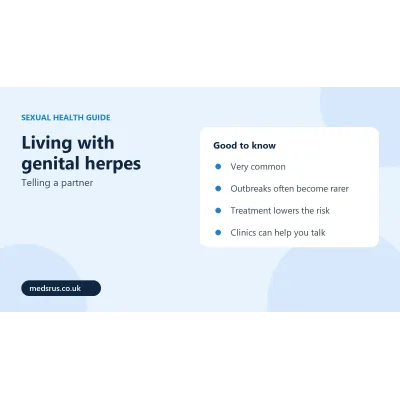
Finding out you have genital herpes can be upsetting, and many people worry most about telling a partner. Herpes is very common, it's manageable, and many people with herpes have long, happy relationships. Having the facts ready can make the conversation easier for you both.
The facts worth knowing
- It's very common. Herpes simplex virus (HSV) causes cold sores as well as genital herpes. Most adults carry at least one type, and many have no symptoms or don't know they have it.
- Outbreaks usually become less frequent. The first episode is often the worst. Later outbreaks tend to be milder and shorter, and many people have few or none.
- It can be passed on without symptoms, but the risk is highest just before and during an outbreak.
- It isn't a sign of being unfaithful. Because the virus can stay unnoticed for years, it's often impossible to know when or from whom it was caught.
- It doesn't affect fertility. If you're pregnant or planning a pregnancy, tell your midwife or GP, who can advise on reducing any risk to the baby.
Preparing for the conversation
- Choose a calm, private moment, before you have sex, not during or straight after.
- Keep it simple and factual. For example: "I want to tell you something before things go further. I have genital herpes. It's common and manageable, and there are things we can do to reduce the chance of passing it on."
- Expect questions, and give your partner time to take it in. It's fine to point them to reliable information, such as the Herpes Viruses Association or the NHS.
- Remember their reaction is about the news, not your worth. Many partners respond with more understanding than people expect.
Lowering the risk of passing it on
- Avoid sex, including oral sex and genital skin contact, from the first tingling or itching until any sores have completely healed.
- Use condoms or dental dams. They reduce the risk, although they don't cover all skin, so they don't remove it completely.
- Consider suppressive treatment. Taking an antiviral tablet such as aciclovir every day can reduce outbreaks and lowers the chance of passing herpes on. It's often offered to people with frequent outbreaks, and sometimes to people in a relationship with a partner who doesn't have herpes.
- Know your triggers. Stress, illness, friction and tiredness can trigger outbreaks in some people.
- Your partner may already have the virus. They can ask a sexual health clinic about testing, although tests for people without symptoms aren't routinely offered.
Looking after yourself
It's normal to feel anxious, angry or low after a diagnosis. These feelings usually ease with time and information. The Herpes Viruses Association offers information and a helpline, and a sexual health clinic can answer questions in confidence. If low mood or anxiety is affecting your daily life, speak to your GP.
Our genital herpes treatment page explains treatment for outbreaks and suppressive treatment. You may also find our guide to herpes vs thrush helpful.
Frequently asked questions
Do I have to tell a partner I have herpes?
Telling a partner before you have sex lets them make an informed choice and lets you both take steps to reduce the risk. Most sexual health clinics can advise on how to have the conversation.
Can I pass on herpes if I don't have symptoms?
Yes, the virus can sometimes be passed on without symptoms, but the risk is highest just before and during an outbreak. Daily antiviral treatment and condoms reduce the risk.
Does daily aciclovir stop herpes spreading?
Daily antiviral treatment reduces outbreaks and lowers the chance of passing herpes on, but it doesn't remove the risk completely. Combining it with condoms and avoiding sex during outbreaks lowers it further.
Can my partner get tested for herpes?
Testing is usually done by swabbing a sore. Blood tests for people without symptoms aren't routinely offered, but a sexual health clinic can advise.
Sources: