


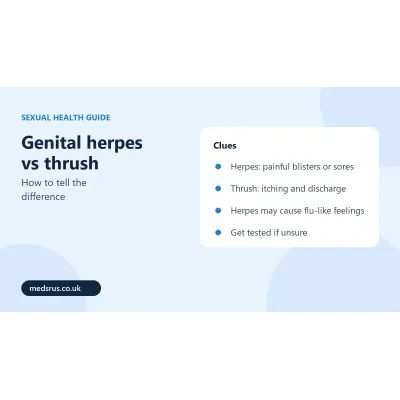
Genital herpes and thrush can both cause itching, soreness and pain when you pee, so it's easy to mistake one for the other. They have very different causes and treatments, though. Thrush is a yeast infection treated with antifungals. Genital herpes is a virus treated with antiviral medicine. Using the wrong treatment won't help and can delay getting the right care.
The key differences
| Symptom | Genital herpes | Thrush |
|---|---|---|
| Main feature | Small blisters that burst to leave red, open sores | Itching, soreness and redness |
| Before symptoms | Tingling, burning or itching where sores later appear | No warning signs |
| Discharge | Sometimes, from the vagina or penis | Women: thick, white discharge like cottage cheese, usually without a strong smell. Men: white discharge under the foreskin |
| Pain | Sores can be very painful; peeing can sting badly | Soreness and stinging, usually milder |
| Feeling unwell | The first episode can cause a high temperature, aches and swollen glands in the groin | No |
| Cause | Herpes simplex virus, usually passed on through sex or skin contact | Overgrowth of Candida yeast; not usually sexually transmitted |
The most important clue is blisters or sores. Thrush can cause small cracks or splits in the skin from scratching, which can look similar, but blisters and open sores aren't typical of thrush.
Why testing matters
Genital herpes is diagnosed by taking a swab from a sore, ideally within a few days of it appearing. If you have blisters or sores, the best step is to visit a sexual health clinic, where testing is free and confidential. You can find a sexual health clinic on the NHS website. Don't use an antifungal thrush treatment if you have sores, and don't wait for them to heal before getting tested.
A clinic can also check for other sexually transmitted infections at the same time. Our guide to the signs of gonorrhoea or chlamydia explains other symptoms to look out for.
Treating thrush
If you've had thrush before and recognise the symptoms, a pharmacist can usually recommend an antifungal pessary, cream or capsule. See a GP or sexual health clinic if it's your first time, you get thrush more than twice in six months, you're pregnant, or treatment hasn't worked. Find out more about thrush treatment for women and thrush treatment for men, or read about what causes thrush.
Treating genital herpes
There's no cure for herpes, but antiviral tablets such as aciclovir can shorten an outbreak and ease symptoms, especially if started early. People who get frequent outbreaks may be offered daily treatment to reduce them. Salt baths, painkillers and petroleum jelly or an anaesthetic cream can help with pain. Our genital herpes treatment page explains the options and how a prescriber reviews your consultation.
When to get help
- Visit a sexual health clinic or GP if you have genital blisters or sores, or symptoms you haven't had before.
- If you're pregnant and think you may have genital herpes, contact your midwife or GP straight away, as treatment may be needed to protect your baby.
- Get urgent help if you can't pee, or have a severe headache with a stiff neck or sensitivity to light.
Frequently asked questions
Can thrush cause sores?
Thrush can cause small cracks or splits in the skin from scratching, but blisters and open sores are more typical of genital herpes. If you have sores, get tested at a sexual health clinic.
Can I use thrush cream on herpes sores?
No. Antifungal thrush treatments don't work on herpes, which is caused by a virus. Get a swab test and the right treatment.
Is thrush a sexually transmitted infection?
No. Thrush is caused by an overgrowth of yeast that normally lives on the body. It isn't usually passed on through sex, although sex can sometimes trigger it.
How is genital herpes tested?
A nurse or doctor takes a swab from a sore, ideally within a few days of it appearing. Testing is free at sexual health clinics.
Sources: