


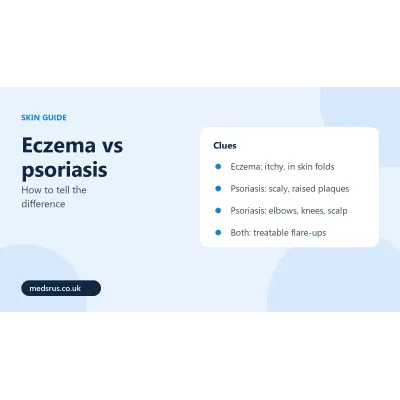
Eczema and psoriasis are both common, long-term skin conditions that cause dry, itchy, inflamed patches. They can look similar, but they have different causes and are treated differently, so it helps to know which one you have.
What causes them
Eczema (atopic eczema or atopic dermatitis) happens when the skin barrier doesn't work as well as it should, so the skin loses moisture and reacts more easily to irritants and allergens. It often starts in childhood and is common in people with asthma or hay fever.
Psoriasis is an immune condition. The immune system speeds up the production of skin cells, so they build up on the surface as raised, scaly patches called plaques. It can start at any age, most often in adults under 35.
The key differences
| Feature | Eczema | Psoriasis |
|---|---|---|
| Appearance | Dry, red or darker patches with blurred edges; can weep, crust or thicken from scratching | Raised, well-defined plaques covered in silvery-white scale (may look purple or grey on darker skin) |
| Itch | Usually intensely itchy | Can itch, burn or feel sore, but often less itchy than eczema |
| Common areas | Inside elbows, behind knees, neck, hands, face (in babies, cheeks) | Outside of elbows and knees, scalp, lower back |
| Nails | Rarely affected | Pitting, discolouration or lifting of the nail |
| Typical start | Often in childhood | Often in early adulthood |
| Linked conditions | Asthma, hay fever, food allergy | Psoriatic arthritis (joint pain and swelling) |
Some people have features of both, and conditions such as seborrhoeic dermatitis or fungal infections can look similar. A GP or prescriber can usually tell the difference by examining your skin.
Common triggers
Eczema: soaps and detergents, wool and synthetic fabrics, heat and sweating, dry or cold weather, stress, and, in some people, house dust mites, pets or pollen.
Psoriasis: skin injury (new plaques can appear on cuts or scratches), throat infections, stress, smoking, alcohol, cold weather and some medicines.
How treatment differs
Both benefit from emollients (moisturisers), used generously and often, even when the skin looks clear. Both can be treated with steroid creams or ointments during flare-ups. See our guide to using steroid creams safely.
Eczema treatment focuses on repairing the skin barrier and calming flares: emollients, avoiding triggers, and topical steroids for flares. Other treatments, such as calcineurin inhibitor creams, are prescribed by GPs or dermatologists.
Psoriasis is often treated with steroids combined with vitamin D-like creams, and specialist treatments such as light therapy or tablets and injections for more severe cases. Scalp psoriasis has its own approach; see our guide to scalp psoriasis treatments.
Our eczema and psoriasis treatment page explains the treatments we offer.
When to see a GP
- you're not sure what's causing your rash
- your skin is getting worse despite treatment, or it's affecting your sleep or mood
- you have painful, swollen or stiff joints, which can be a sign of psoriatic arthritis (our article on Achilles tendonitis and psoriatic arthritis explains one way it can show up)
- eczema becomes weepy, crusted, hot or painful, which can mean infection
Get urgent help if eczema suddenly gets much worse with painful, clustered blisters or open sores, especially with a high temperature. This can be eczema herpeticum, a serious infection that needs same-day treatment. Also get urgent help if red, inflamed skin spreads over most of your body.
Frequently asked questions
Can eczema turn into psoriasis?
No. They're separate conditions with different causes. Some people have both, and they can look similar, so a GP or prescriber may need to examine your skin to tell them apart.
Is psoriasis or eczema more itchy?
Eczema is usually more intensely itchy. Psoriasis can itch too, but often feels more sore or burning.
Are eczema and psoriasis contagious?
No. Neither condition can be passed on to other people.
Can the same cream treat eczema and psoriasis?
Emollients and steroid creams are used for both. Psoriasis is also often treated with vitamin D-like creams, which aren't used for eczema.
Sources: