


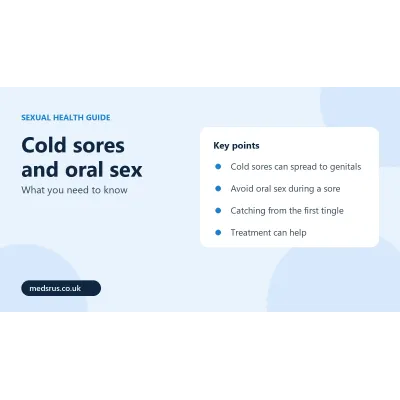
Cold sores and genital herpes are caused by the same family of viruses, herpes simplex. Cold sores are usually caused by herpes simplex type 1 (HSV-1), and HSV-1 is now a common cause of genital herpes in the UK, often passed on through oral sex. Knowing when the risk is highest makes it much easier to protect a partner.
How cold sores spread to the genitals
The virus is passed on through direct skin contact with the affected area. If someone with a cold sore gives oral sex, the virus can pass to their partner's genitals or anus and cause genital herpes. It can also go the other way: genital herpes can be passed to the mouth.
The risk is highest:
- when you feel the first tingling, burning or itching of a cold sore coming
- while blisters are present or have burst
- until the sore has completely healed and the scab has gone
The virus can occasionally be passed on when there are no symptoms, but this is much less likely.
How to lower the risk
- Don't give oral sex from the first tingle until a cold sore has completely healed. Avoid kissing too.
- Use a condom or dental dam for oral sex. They reduce the risk, although they don't cover all skin.
- Don't touch the cold sore, and wash your hands if you do. Don't share towels, lip balm or cutlery while you have one.
- Know your triggers. Colds, sunlight, stress and tiredness can trigger cold sores in some people. Using a lip balm with sunscreen may help.
- Talk about it. Telling a partner you get cold sores helps you both make decisions. Our guide to telling a partner about herpes has tips.
Treating a cold sore
Cold sores usually heal on their own within about 10 days. Antiviral creams containing aciclovir, available from pharmacies, may shorten an outbreak slightly if used as soon as you feel the tingle. Cold sore patches can protect the sore and help it heal. Painkillers can help if the sore is painful. See a GP if a cold sore hasn't started to heal after 10 days, is very large or painful, or if you have a weakened immune system.
If you think you've caught genital herpes
Symptoms of genital herpes usually appear within a few days to a few weeks of contact, and can include tingling, small blisters, painful sores and pain when you pee. The first episode can also cause flu-like symptoms. Some people have no symptoms at all.
Visit a sexual health clinic while you have symptoms, as a swab from a sore is the best way to confirm herpes. You can find a sexual health clinic on the NHS website. Our genital herpes treatment page explains antiviral treatment, and our guide to catching chlamydia from oral sex covers other infections that can spread this way.
Cold sores and babies
Herpes can be very serious for newborn babies. Don't kiss babies if you have a cold sore. If you're pregnant and have genital sores, or think you may have caught herpes, contact your midwife or GP straight away.
Frequently asked questions
Can you get genital herpes from a cold sore?
Yes. The virus that causes most cold sores can be passed to the genitals through oral sex and cause genital herpes.
When is it safe to give oral sex after a cold sore?
Wait until the cold sore has completely healed and the scab has gone. Avoid oral sex from the first tingle or itch.
Can you spread cold sores without having one?
It's possible but much less likely. The risk is highest from the first tingle until the sore has fully healed.
Do condoms protect against herpes during oral sex?
Condoms and dental dams reduce the risk but don't remove it completely, because they don't cover all skin. Avoiding oral sex during a cold sore is the most effective step.
Sources: