


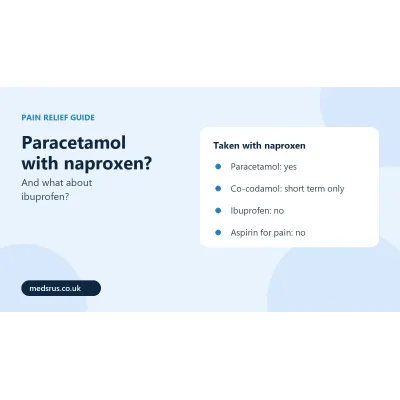
Yes, you can take paracetamol with naproxen. They work in different ways, so they don't clash, and the NHS says they can be taken at the same time for a short while. Ibuprofen is different. It belongs to the same family as naproxen, and you shouldn't take the two together.
This guide explains how to combine naproxen and paracetamol safely, why ibuprofen is the one to leave out, and what to do if you've already taken both.
The short answer
| Taken with naproxen | Is it OK? | Why |
|---|---|---|
| Paracetamol | Yes | A different type of painkiller, so the two don't interact |
| Co-codamol | Yes, for a short time | It already contains paracetamol, so don't add more paracetamol on top |
| Ibuprofen | No | Same family as naproxen, so the risks add up |
| Aspirin for pain | No | Also an anti-inflammatory |
| Low-dose aspirin for your heart | Check first | Don't stop it, but tell the prescriber or pharmacist |
| Ibuprofen or diclofenac gel | Check first | A little is absorbed through the skin |
Why paracetamol and naproxen can be taken together
Naproxen is a non-steroidal anti-inflammatory drug, or NSAID. It lowers the chemicals in your body that cause swelling and pain, which is why it suits sore joints, back pain, sprains and period pain.
Paracetamol isn't an anti-inflammatory. It works mainly on how the brain and nerves handle pain signals, and it brings down a temperature.
Because they act on different parts of the problem, taking both can ease pain that one alone doesn't quite cover, without doubling up on the same side effects. The NHS advice on naproxen is that it can be taken at the same time as paracetamol or co-codamol if needed for a short time, and that it's worth speaking to a pharmacist or doctor first.
How to take them together
You don't need to leave a gap between naproxen and paracetamol. You can swallow them together or at different times of day. What matters is staying within the limit for each one.
- Naproxen: take the dose on your label, usually 250mg or 500mg twice a day, with or just after food.
- Paracetamol: one or two 500mg tablets at a time, with at least four hours between doses, and no more than eight tablets in 24 hours. These are the NHS dose limits for adults.
A day on both might look like this:
- Breakfast: naproxen and paracetamol
- Lunchtime: paracetamol
- Evening meal: naproxen and paracetamol
- Bedtime: paracetamol
It's sensible to try one on its own first. If naproxen is keeping the pain under control, you don't need the paracetamol as well. Add it on the bad days and drop it again when things settle.
If you weigh less than 50kg, have liver problems or drink heavily, ask a pharmacist what paracetamol dose is right for you, as it may be lower.
Watch for paracetamol in other products
This is where people most often go wrong. Paracetamol is an ingredient in a lot of other medicines, including:
- co-codamol and co-dydramol
- many cold and flu tablets, capsules and hot drinks
- some migraine and period pain products
If you take one of these with paracetamol tablets, you can go over the daily limit without realising. Too much paracetamol can damage the liver, and you may feel fine at first. Check the ingredients on the pack, or ask a pharmacist to check for you.
Why you shouldn't take ibuprofen with naproxen
Ibuprofen and naproxen are both NSAIDs. They work in the same way, so taking them together doesn't give you much extra pain relief. What it does add is risk. The NHS says not to take naproxen at the same time as ibuprofen or aspirin, because it raises the chance of serious side effects such as stomach ulcers.
The main risks of doubling up are:
- stomach irritation, ulcers and bleeding
- strain on the kidneys, especially if you're dehydrated or older
- raised blood pressure and fluid retention.
Ibuprofen is also hidden in some cold and flu products, and aspirin in some soluble painkillers and cold remedies. Read the label before taking anything alongside naproxen.
If naproxen alone isn't enough, add paracetamol, not ibuprofen.
What if I've already taken ibuprofen and naproxen?
Don't panic. A single overlap is unlikely to harm an otherwise healthy adult. Don't take any more of either for now, have something to eat, and drink plenty of water.
Speak to a pharmacist or call NHS 111 if you:
- have had a stomach ulcer or bleeding in the past
- have kidney, heart or liver problems
- take blood thinners, steroid tablets or an SSRI antidepressant
- have taken more than the dose on the label of either medicine.
Get urgent help if you have severe tummy pain, vomit blood, or pass black, tar-like poo.
Switching from one to the other
If you want to swap, wait until the next dose of the one you've taken would have been due. For ibuprofen that's about six to eight hours. Naproxen lasts longer, so leave about 12 hours after your last naproxen tablet before taking ibuprofen.
Who should check before taking naproxen at all
Paracetamol suits most people. Naproxen needs more care. Speak to a pharmacist or prescriber first if you:
- have had a stomach ulcer, or get a lot of indigestion
- have heart, kidney or liver problems, or high blood pressure
- have asthma that's made worse by ibuprofen or aspirin
- take blood thinners, steroids, some antidepressants or blood pressure medicines
- are pregnant, trying for a baby or breastfeeding
- are over 65.
Some people are given a stomach-protecting medicine such as omeprazole to take alongside naproxen.
When to see a doctor about the pain
Painkillers are for short spells. See a GP if:
- you've needed naproxen bought from a pharmacy for more than three days
- the pain is getting worse, or keeps coming back
- you have back pain with numbness, weakness, or trouble passing urine
- you need both medicines every day just to get by.
If back pain is the problem, our guides to mechanical lower back pain and telling kidney pain from muscle pain may help you work out what's going on.
Getting naproxen from MedsRus
Naproxen is a prescription medicine for most kinds of pain. At MedsRus you fill in a short online consultation, a UK prescriber checks it's suitable for you, and we send it out in plain packaging. You can read about doses and side effects on our naproxen tablets page, or compare your options on our pain relief and period pain pages.
Frequently asked questions
Can I take naproxen and paracetamol at the same time?
Yes. They don't interact, so you can take them together or at different times. Keep to the dose on each label and don't take more than eight 500mg paracetamol tablets in 24 hours.
How long after naproxen can I take paracetamol?
Straight away. There's no need to wait, as long as it's been at least four hours since your last dose of paracetamol.
How long after ibuprofen can I take naproxen?
Wait until your next ibuprofen dose would have been due, which is about six to eight hours. Going the other way, leave about 12 hours after naproxen before taking ibuprofen.
Can I take co-codamol with naproxen?
Yes, for a short time, if a pharmacist or prescriber has said it's suitable. Co-codamol already contains paracetamol, so don't take separate paracetamol with it.
Can I take naproxen, paracetamol and ibuprofen together?
No. Naproxen and paracetamol are fine together. Ibuprofen shouldn't be added, because it's the same type of medicine as naproxen.
Can I drink alcohol with naproxen and paracetamol?
A small amount is usually fine. Alcohol makes stomach irritation and bleeding more likely with naproxen, and heavy drinking makes paracetamol harder on the liver, so keep it light.
Sources: