


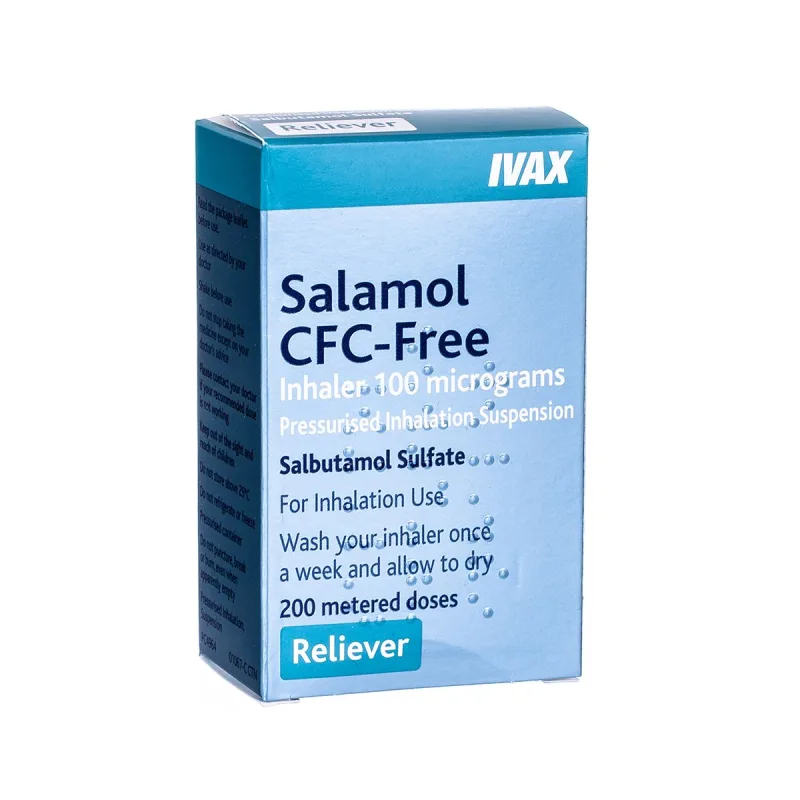
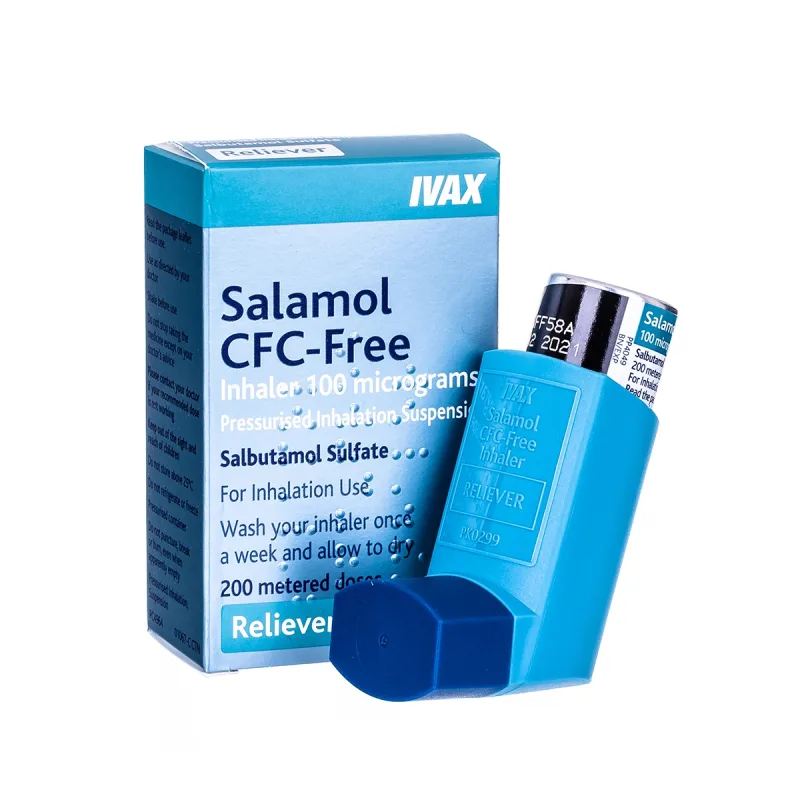
Images are for illustration only.
Salamol
Salamol is a blue reliever inhaler containing salbutamol 100 micrograms per puff. It opens your airways within minutes when you're wheezy or breathless. If you need it 3 or more times a week, you also need a preventer inhaler and an asthma review.
Free online assessment with a UK prescriber



Salamol is a blue reliever inhaler. Each puff contains 100 micrograms of salbutamol, which opens the airways within a few minutes when you're wheezy, breathless or your chest feels tight. A reliever treats symptoms, but it doesn't control asthma: if you need it often, you also need a preventer. A UK prescriber reviews a short online consultation before supplying it.
Salamol at a glance
| Details | |
|---|---|
| Active ingredient | Salbutamol 100 micrograms per puff |
| Type of inhaler | Blue reliever, metered dose inhaler (200 puffs) |
| Starts working | Within a few minutes; lasts about 4 to 6 hours |
| Usual dose | 1 or 2 puffs when needed, up to 4 times in 24 hours |
| Important | Needing it 3 or more times a week means you need an asthma review |
| Prescription needed | Yes |
Reliever or preventer: why it matters
A blue reliever inhaler treats symptoms when they happen, but it doesn't treat the inflammation in your airways that causes asthma. If you need your reliever 3 or more times a week, wake at night with asthma, or have had an asthma attack, your asthma isn't well controlled. You need a preventer inhaler and an asthma review with your GP or asthma nurse.
UK asthma guidance (BTS, NICE and SIGN, 2024) no longer recommends using a blue reliever on its own, without a preventer. Relying on a reliever alone is linked to serious asthma attacks. If you've only ever been given a blue inhaler, please book a review with your GP.
How to use your Salamol inhaler
- Remove the cap and shake the inhaler well.
- If it's new, or you haven't used it for a few days, spray it into the air first, as the leaflet explains.
- Breathe out gently, away from the inhaler.
- Put the mouthpiece between your lips and seal your lips around it.
- Start to breathe in slowly and steadily, and press the canister once at the same time.
- Keep breathing in, then hold your breath for about 10 seconds, or as long as is comfortable.
- Breathe out slowly. If you need a second puff, wait about 30 seconds, shake the inhaler and repeat.
Pressing and breathing in at the same time can be tricky. A spacer makes it much easier and helps more medicine reach your lungs. See our guide on how to use a spacer with an inhaler.
How many puffs, and what to do in an asthma attack
The usual dose for adults and children is 1 or 2 puffs when you need them, up to 4 times in 24 hours. If you need it more than 4 times in a day, your asthma may be getting worse: speak to your GP or asthma nurse the same day.
If you're having an asthma attack:
- Sit up straight and try to keep calm.
- Take 1 puff of your reliever every 30 to 60 seconds, up to 10 puffs.
- If you feel worse at any point, or you don't feel better after 10 puffs, call 999.
- If the ambulance hasn't arrived after 10 minutes and you're still unwell, repeat step 2.
Even if your symptoms settle, see your GP or asthma nurse within 48 hours of an attack. An asthma action plan helps you know what to do and when.
Side effects of Salamol
- Common: feeling shaky, a headache, and a faster heartbeat. These usually pass within a short time.
- Less common: palpitations, muscle cramps, and irritation of the mouth or throat.
- Rare: low potassium in the blood, usually only with high doses.
Very rarely, the inhaler can make breathing worse straight after a puff (paradoxical wheezing). If this happens, stop using it and get medical help straight away, using a different reliever if you have one.
Medicines and conditions to tell us about
Tell us if you have heart problems, high blood pressure, an overactive thyroid, diabetes or low potassium. You can usually still use a reliever, but the prescriber may need to check things first. Never stop using your reliever because of these without speaking to a doctor.
Tell us about any other medicines you take. Beta blockers, such as propranolol, can make asthma worse and stop salbutamol working properly. Some water tablets (diuretics), steroid tablets and theophylline can lower potassium levels when taken with high doses of salbutamol.
Pregnancy and breastfeeding: keeping asthma well controlled matters during pregnancy, and inhaled salbutamol is generally used when needed. Tell the prescriber if you're pregnant or breastfeeding.
Salamol or Ventolin?
Salamol and Ventolin Evohaler contain the same medicine at the same strength, salbutamol 100 micrograms per puff, and are used in the same way. If you're used to one, you can usually switch to the other. Our page on asthma reliever inhalers compares them. If you're unsure whether your symptoms are asthma, our article on asthma attacks and anxiety attacks may help.
How to get Salamol from MedsRus
- Complete a short online consultation about your asthma, how often you use your reliever and any other medicines you take.
- A UK prescriber reviews it. If your answers suggest your asthma isn't well controlled, they'll advise you to see your GP or asthma nurse.
- We send it in discreet packaging if it's suitable.
Salamol FAQs
What is Salamol CFC-free inhaler used for?
It's a reliever inhaler for asthma. The salbutamol in it relaxes the muscles around your airways within a few minutes, easing wheezing, coughing, breathlessness and a tight chest. It's sometimes prescribed for COPD too. CFC-free just means the propellant doesn't harm the ozone layer; all inhalers sold in the UK are now CFC-free.
How many puffs of Salamol can I take?
Usually 1 or 2 puffs when you need them, up to 4 times in 24 hours. During an asthma attack, take 1 puff every 30 to 60 seconds, up to 10 puffs, and call 999 if you don't feel better or you feel worse at any point.
Is Salamol the same as Ventolin?
Yes, in the way it works. Both contain salbutamol 100 micrograms per puff and are used in the same way. They're made by different companies and the inhalers look a little different.
How often should I need my reliever?
If your asthma is well controlled, you should rarely need it. Needing it 3 or more times a week, or waking at night with asthma, means you should see your GP or asthma nurse for a review and a preventer inhaler.
Do I need a spacer?
A spacer helps more of the medicine reach your lungs and makes the inhaler easier to use, especially during an attack. Many people benefit from one, and children should always use one.
Can I use Salamol before exercise?
If exercise brings on your asthma, talk to your GP or asthma nurse. Needing your reliever before exercise can be a sign that your asthma isn't well controlled and you need a preventer.
Sources: